How to Measure Silicon Resistivity & Mobility Specs
Dopant Density Calculator
A postdoctoral researcher requested a quote for the following.
We are interested in purchasing highly doped n-type wafers (~10¹⁸ cm⁻³) with varying thermal oxide thicknesses. I came across one option on your website that lists a resistivity range of 0–100 Ω·cm. Could you confirm the exact resistivity of this wafer? Item #2002
We want 0.022 ohm-cm corresponding to n-type dopant density of ~10¹⁸ cm⁻³. We also want a 100 nm thermal oxide on top of it.
UniversityWafer, Inc. Quoted:
50.8mm N/Ph <100> 0.022 ohm-cm 300-350um SSP with 100nm of thermal oxide
50.8mm N/Ph <100> 0.022 ohm-cm 300-350um SSP with 100nm of thermal oxide
Reference #321110 for specs and pricing. Calculator.
Get Your Quote FAST! Or, Buy Online and Start Researching Today!
To calculate Resistivity, choose Dopant and enter/modify Dopant Density in
either one of two
Dopant Density fields;
the Calculator will compute Type, Resistivity and
Mobility in corresponding columns.
To calculate Dopant Density, choose Dopant and enter/modify Resistivity.
Concentration and Mobility are always computed; they cannot be entered/modified.
Likewise type is a consequence of the Dopant chosen.
Two rows of fields are provided to help display low and high Dopant Density
limits and corresponding Resistivities.
What is Dopant Density and Number Density in Semiconductor Devices?
If you're looking for an explanation of the terms Dopant density (D) and Number density (N) in semiconductor devices, you've come to the right place. In this article, we'll discuss the differences between these two quantities and their effect on resistivity. Then, we'll cover phosphorus and N-type dopants.
Dopant density
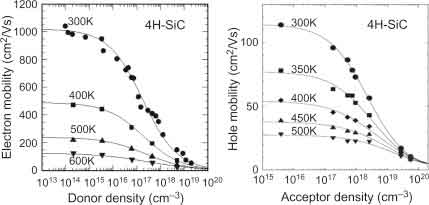
Dopant density is a measurement of the amount of a particular impurity in a material. Usually, the dopant concentration is a few percent. As the dopant density increases, the mobilities decrease. This is due to scattering, which is nonlinear and becomes most pronounced at higher dopant concentrations.
The atomic density of a dopant can vary widely depending on its composition. For example, in n-type materials, the doping density is quite low, and the electron-electron interaction decreases with increasing doping density. The other important process is scattering at phonons, which correspond to thermally stimulated lattice vibrations.
Because of this, it is important to know how to convert the dopant density to resistivity. In the semiconductor industry, this is necessary for mathematical modeling. For example, the resistance of a semiconductor device is often expressed as the ratio of the doping density. The resistivity of a material depends on the amount of dopant and the amount of carriers in the material.
Different methods are used to measure dopant concentration. Some of them are based on fabrication information, while others rely on absorption spectra. In optical fibers, for instance, the dopant is often inserted into the fiber core. Therefore, absorption spectra may be necessary to accurately determine the dopant concentration.
Effect of dopant density on resistivity
The effect of dopant density on resistivity in silicon can be measured using the SMM technique. This method can be applied in materials science, the semiconductor industry, and failure analysis. However, it is important to note that SMM measurements have inherent error. This error can be as high as 28% in regions with doping levels of 1015 atoms/cm3.
The results of these experiments were significantly different from those of the p-type resistivity curve that was being used at the time. The largest deviation occurred at boron density of 51017 cm-3. This difference caused ASTM Committee F-1 to decide that industry needed a recommended conversion between resistivity and dopant density. This work led to the creation of a new ASTM Standard Practice that uses the dopant density to calculate resistivity. It has been cited in several publications and is the basis for five other ASTM measurement standards.
For the SMM calibration, the measurement of capacitance and resistivity is conducted by using an SMM at 18 GHz. The raw data are converted into resistance and capacitance images by a complex impedance calibration workflow. Both EFM and SMM approach curves were acquired on the same dopant sample. Then, the three-error parameter model was applied to convert complex S11 values into tip-sample impedances. This approach works in situ on the sample. However, it requires a calibration sample.
The effect of dopant density on resistivity is often dependent on the temperature. In a silicon heterojunction solar cell, the TCO/a-Si:H(p) contact is critical for the electron transport in the silicon heterojunction solar cell. The electrons from the TCO must recombine loss-free with the holes from the emitter, and it is crucial that the dopant density is high for this process to occur.
Phosphorus
The density of dopants in semiconductors depends on the density of phosphorus and dopant density in the semiconductor. Both of these factors are related to the mobility of the majority of electrons. The mobility of electrons is proportional to the Fermi level. A large difference in the density of dopants and free carriers leads to incomplete ionisation.
Sims spectroscopy can be used to estimate impurity concentrations and gas flow ratios. Blue circles indicate boron doping, while red circles indicate phosphorus doping. This method is used to control the growth of diamonds, thereby achieving heavy phosphorus doping.
Boron impurity
The density of dopants and impurities in semiconductors depends on the type of impurities present. The density of boron atoms is higher at the surface than at the deep layer. Moreover, the density of boron atoms decreases with increasing depth. A typical example is shown in FIG. 8.
Thermal conductivity of BAs at 300 K depends on the density of dopants. In this figure, solid lines denote impurities that do not affect the thermal conductivity and dotted lines denote charged impurities. The thermal conductivity is also related to the phonon-defect scattering rate.
Boron is one of the few elements in the periodic table that forms triple bonds. It has a higher energy band gap than silicon and germanium. The name of the element derives from a combination of the Arabic word buraqu and carbon. The element is also one of the few elements with a band gap that is larger than one eV.
The free hole density decreases with increasing impurity density, but the electrons from donor atoms compensate for this. The maximum impurity density for Si, Ge, and C is 1.5 x 1017 cm-3. The latter three elements have the same acceptor ionization energy, but C has a larger energy than Ge and Si.
Rare earth impurity
Rare earth impurity and dopant densities in germanium are investigated by modeling the charge state transition energies. In this study, the formation energy of the neutral charge state is found to be between -0.14 and 3.13 eV. In equilibrium, the Pr dopant in Ge exhibits the lowest formation energy. In addition, the Eu dopant in Ge induces shallow acceptor levels.
Rare earths are composed of 17 natural metallic elements that include yttrium, scandium, and lanthanides. These elements are classified into heavy and light categories. Their principal ores are identified. They are primarily mined in China, which supplies approximately 97 percent of the world's supply. Their commercial uses are also described.
As for the dopant density, the substitutional C and N dopants fulfill the 2p orbitals of the dopant. The C atom has four 2p electrons while the N atom has five. Therefore, the two p electrons of the C atom are diffused to neighboring O atoms. As a result, the total magnetic moment in a CeO2 supercell is 2.0 mB. Furthermore, the six second-nearest O atoms each contribute 0.048 mB. However, CeO2 is prone to defects like oxygen vacancies. In addition, a defect in the ceO2 system causes the formation of cation dangling bonds.
The doping formation energy is a useful tool for understanding relative doping difficulty in different growth conditions. The atomic number of each rare earth element affects the doping energy of a material. Calculations were made using density functional theory (DFT) and the generalized gradient approximation.
What is Dopant Density and Number Density in Semiconductor Devices?
If you're looking for an explanation of the terms Dopant density (D) and Number density (N) in semiconductor devices, you've come to the right place. In this article, we'll discuss the differences between these two quantities and their effect on resistivity. Then, we'll cover phosphorus and N-type dopants.
Dopant density
Dopant density is a measurement of the amount of a particular impurity in a material. Usually, the dopant concentration is a few percent. As the dopant density increases, the mobilities decrease. This is due to scattering, which is nonlinear and becomes most pronounced at higher dopant concentrations.
The atomic density of a dopant can vary widely depending on its composition. For example, in n-type materials, the doping density is quite low, and the electron-electron interaction decreases with increasing doping density. The other important process is scattering at phonons, which correspond to thermally stimulated lattice vibrations.
Because of this, it is important to know how to convert the dopant density to resistivity. In the semiconductor industry, this is necessary for mathematical modeling. For example, the resistance of a semiconductor device is often expressed as the ratio of the doping density. The resistivity of a material depends on the amount of dopant and the amount of carriers in the material.
Different methods are used to measure dopant concentration. Some of them are based on fabrication information, while others rely on absorption spectra. In optical fibers, for instance, the dopant is often inserted into the fiber core. Therefore, absorption spectra may be necessary to accurately determine the dopant concentration.
Effect of dopant density on resistivity
The effect of dopant density on resistivity in silicon can be measured using the SMM technique. This method can be applied in materials science, the semiconductor industry, and failure analysis. However, it is important to note that SMM measurements have inherent error. This error can be as high as 28% in regions with doping levels of 1015 atoms/cm3.
The results of these experiments were significantly different from those of the p-type resistivity curve that was being used at the time. The largest deviation occurred at boron density of 51017 cm-3. This difference caused ASTM Committee F-1 to decide that industry needed a recommended conversion between resistivity and dopant density. This work led to the creation of a new ASTM Standard Practice that uses the dopant density to calculate resistivity. It has been cited in several publications and is the basis for five other ASTM measurement standards.
For the SMM calibration, the measurement of capacitance and resistivity is conducted by using an SMM at 18 GHz. The raw data are converted into resistance and capacitance images by a complex impedance calibration workflow. Both EFM and SMM approach curves were acquired on the same dopant sample. Then, the three-error parameter model was applied to convert complex S11 values into tip-sample impedances. This approach works in situ on the sample. However, it requires a calibration sample.
The effect of dopant density on resistivity is often dependent on the temperature. In a silicon heterojunction solar cell, the TCO/a-Si:H(p) contact is critical for the electron transport in the silicon heterojunction solar cell. The electrons from the TCO must recombine loss-free with the holes from the emitter, and it is crucial that the dopant density is high for this process to occur.
Phosphorus
The density of dopants in semiconductors depends on the density of phosphorus and dopant density in the semiconductor. Both of these factors are related to the mobility of the majority of electrons. The mobility of electrons is proportional to the Fermi level. A large difference in the density of dopants and free carriers leads to incomplete ionisation.
Sims spectroscopy can be used to estimate impurity concentrations and gas flow ratios. Blue circles indicate boron doping, while red circles indicate phosphorus doping. This method is used to control the growth of diamonds, thereby achieving heavy phosphorus doping.
Boron impurity
The density of dopants and impurities in semiconductors depends on the type of impurities present. The density of boron atoms is higher at the surface than at the deep layer. Moreover, the density of boron atoms decreases with increasing depth. A typical example is shown in FIG. 8.
Thermal conductivity of BAs at 300 K depends on the density of dopants. In this figure, solid lines denote impurities that do not affect the thermal conductivity and dotted lines denote charged impurities. The thermal conductivity is also related to the phonon-defect scattering rate.
Boron is one of the few elements in the periodic table that forms triple bonds. It has a higher energy band gap than silicon and germanium. The name of the element derives from a combination of the Arabic word buraqu and carbon. The element is also one of the few elements with a band gap that is larger than one eV.
The free hole density decreases with increasing impurity density, but the electrons from donor atoms compensate for this. The maximum impurity density for Si, Ge, and C is 1.5 x 1017 cm-3. The latter three elements have the same acceptor ionization energy, but C has a larger energy than Ge and Si.
Rare earth impurity
Rare earth impurity and dopant densities in germanium are investigated by modeling the charge state transition energies. In this study, the formation energy of the neutral charge state is found to be between -0.14 and 3.13 eV. In equilibrium, the Pr dopant in Ge exhibits the lowest formation energy. In addition, the Eu dopant in Ge induces shallow acceptor levels.
Rare earths are composed of 17 natural metallic elements that include yttrium, scandium, and lanthanides. These elements are classified into heavy and light categories. Their principal ores are identified. They are primarily mined in China, which supplies approximately 97 percent of the world's supply. Their commercial uses are also described.
As for the dopant density, the substitutional C and N dopants fulfill the 2p orbitals of the dopant. The C atom has four 2p electrons while the N atom has five. Therefore, the two p electrons of the C atom are diffused to neighboring O atoms. As a result, the total magnetic moment in a CeO2 supercell is 2.0 mB. Furthermore, the six second-nearest O atoms each contribute 0.048 mB. However, CeO2 is prone to defects like oxygen vacancies. In addition, a defect in the ceO2 system causes the formation of cation dangling bonds.
The doping formation energy is a useful tool for understanding relative doping difficulty in different growth conditions. The atomic number of each rare earth element affects the doping energy of a material. Calculations were made using density functional theory (DFT) and the generalized gradient approximation.

 devices, you've come to the right place. In this article, we'll discuss the differences between these two quantities and their effect on resistivity. Then, we'll cover phosphorus and N-type dopants.