MEMS Sensors Transforming Industrial Applications
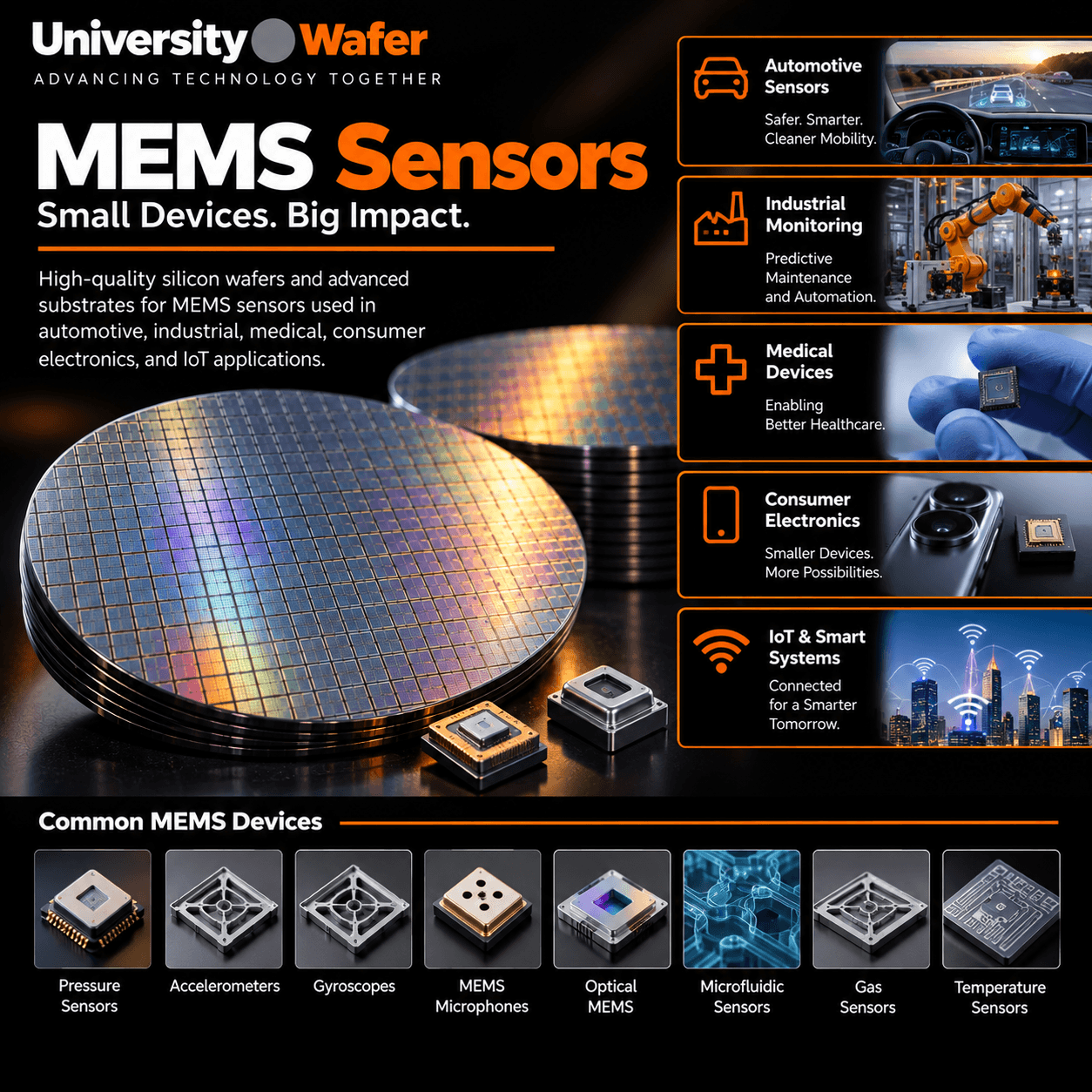
MEMS (Micro-Electro-Mechanical Systems) sensors have become pivotal in industrial automation, offering precise measurement capabilities in compact, durable packages. These silicon-based devices integrate mechanical structures and electronic components at microscale (1-100 micrometers) to measure pressure, acceleration, temperature, and other physical parameters with exceptional accuracy. These miniature marvels are improving factories, automotive plants, and industrial processes worldwide. Let's explore how MEMS sensors are revolutionizing manufacturing, quality control, and predictive maintenance.
Get Your Quote FAST! Or, Buy Online and Start Researching Today!
Key Takeaways
Aspect |
Details |
Size |
Microscale (1-100 micrometers), packages as small as 3x3x1 mm³ |
Functionality |
Measure pressure (0.1% FS accuracy), temperature, acceleration (±2% accuracy), sound (ppm-level sensitivity) |
Advantages |
Ultra-low power (10-100 µW), cost-effective, 50,000g shock tolerance, 100,000+ cycle durability |
Applications |
Predictive maintenance, process automation, safety systems, robotics with 0.01° tilt resolution |
Market Growth |
Projected to reach $31.4B by 2031, driving smart manufacturing transformation |
What Are MEMS Sensors?
MEMS sensors are sophisticated devices that combine mechanical and electronic components on a single silicon chip at the microscale level. They measure physical parameters like pressure, temperature, acceleration, and sound through advanced sensing mechanisms. MEMS sensors translate physical changes into electrical signals with remarkable accuracy, making them indispensable in modern industrial applications.
MEMS sensors are remarkably small (fitting in 3x3x1 mm³ packages), consume minimal power (10-100 µW), and can be manufactured in large quantities, making them cost-effective to produce. They demonstrate exceptional durability with 50,000g shock tolerance and can operate reliably for over 100,000 pressure cycles at 105°C. MEMS technology is like having highly intelligent, microscopic assistants embedded in machines and devices. Their compact size allows integration into complex systems without adding significant weight, which is crucial in industries like aerospace and automotive where every gram matters. The ultra-low power consumption makes them ideal for battery-operated devices and remote sensing applications, extending operational life and reducing maintenance requirements.
Core Operating Principles and Technology
MEMS sensors operate through sophisticated sensing mechanisms that convert physical phenomena into measurable electrical signals with exceptional precision and reliability.
Capacitive Sensing Technology
The fundamental operating principle of most MEMS sensors involves capacitive sensing, where a suspended mass positioned between capacitive plates detects mechanical changes. This technology enables highly sensitive and accurate measurements across various physical parameters.
Key sensing mechanisms include:
-
Pressure sensors using diaphragm deflection that alters capacitance, converted to electrical signals through ASICs (Application-Specific Integrated Circuits)
-
Accelerometers measuring tilt or vibration via mass displacement with ±2% accuracy
-
Gyroscopes utilizing Coriolis force detection for angular velocity measurements
-
6-axis IMUs (Inertial Measurement Units) providing comprehensive motion sensing with 0.01° tilt resolution
This capacitive approach provides excellent sensitivity, low noise, and stable operation across wide temperature ranges, making MEMS sensors ideal for demanding industrial environments.
Top MEMS Sensors for Industrial Use
1. Piezoresistive Sensors: The Precision Pressure Pros
Piezoresistive sensors are exceptional for measuring pressure in industrial applications with 0.1% full-scale accuracy. They change their electrical resistance when pressure is applied, making them perfect for monitoring hydraulic systems, cleanroom environments, and critical process control applications. These sensors provide accurate readings across wide pressure ranges while maintaining stability in harsh industrial conditions.
Industrial-grade MEMS pressure sensors guarantee over 100,000 pressure cycles at 105°C, demonstrating exceptional longevity and reliability. They feature dual-range capabilities (1260 hPa/4060 hPa) for altitude-variable applications and can withstand extreme environmental conditions. In hydraulic and pneumatic systems, these sensors maintain optimal pressure levels, ensuring operational efficiency and preventing costly equipment damage through precise monitoring and control.
2. Accelerometers and Gyroscopes: The Motion Masters
Advanced MEMS accelerometers and gyroscopes work synergistically to provide comprehensive motion sensing capabilities. Accelerometers measure linear acceleration with ±2% accuracy, while gyroscopes track angular velocity using Coriolis force detection. Together, they enable precise 3D motion tracking essential for industrial robotics and advanced automation systems.
In modern factories, these sensors enable robotic arms to achieve positioning accuracy within 0.01° tilt resolution, dramatically improving manufacturing precision. They excel at detecting machinery vibration patterns that indicate bearing wear or misalignment, enabling predictive maintenance strategies that can reduce downtime by up to 40%. The vibration sensors, such as STMicroelectronics' IIS2DULPX, provide real-time machinery health monitoring with exceptional sensitivity and reliability.
3. Temperature Sensors: The Thermal Intelligence Systems
Semiconductor-based MEMS temperature sensors are critical for maintaining optimal industrial process conditions. These sensors detect minute temperature variations with rapid response times and exceptional accuracy, making them indispensable in chemical processing, food manufacturing, and semiconductor fabrication facilities.
These advanced sensors provide real-time thermal feedback for automated climate control systems, ensuring optimal operating conditions for sensitive manufacturing processes. In semiconductor fabrication, they maintain the precise temperatures required for wafer processing and equipment operation. MEMS temperature sensors integrate directly into electronic circuits, enabling compact and efficient thermal management solutions across diverse industrial applications.
4. MEMS Microphones: The Acoustic Intelligence Network
Silicon-based MEMS microphones are revolutionizing industrial acoustics and safety monitoring. These ultrasonic MEMS microphones can identify gas leaks in pipelines with ppm-level sensitivity, enabling rapid detection and response that reduces operational downtime by up to 40%. Their exceptional sensitivity and compact design make them ideal for creating acoustic sensor arrays that provide precise sound source localization.
MEMS microphones demonstrate remarkable durability and reliability in harsh industrial environments where traditional microphones fail. In automotive manufacturing, they enable voice control systems and quality control through acoustic signature analysis. These microphones support advanced noise cancellation and acoustic imaging applications, providing critical safety monitoring in hazardous industrial environments.
5. Optical MEMS: The Photonic Precision Systems
Optical MEMS devices leverage light-based sensing for sophisticated industrial applications. These sensors utilize microscopic mirrors and precisely controlled light beams for advanced measurement and communication systems. They're essential in fiber optic networks for maintaining optimal data transmission and in spectroscopic analysis for material characterization and quality control.
Optical MEMS function as microscopic photonic control systems, enabling precise light manipulation for advanced sensing and communication technologies. In autonomous vehicle systems, optical MEMS enable LiDAR technology that provides detailed 3D environmental mapping. They support augmented reality displays through compact, energy-efficient projection systems and enable advanced optical switching in telecommunications infrastructure.
Key Industrial Applications and Performance
MEMS sensors are transforming industrial operations through three critical application areas that demonstrate their exceptional capabilities and measurable impact on operational efficiency.
1. Predictive Maintenance Revolution
MEMS-based predictive maintenance systems provide unprecedented machinery health monitoring capabilities:
-
Vibration sensors like STMicroelectronics' IIS2DULPX monitor machinery health with ±2% accuracy, detecting bearing wear and misalignment before failure occurs
-
Ultrasonic MEMS microphones identify gas leaks in pipeline systems, reducing operational downtime by up to 40% through early detection
-
Multi-axis accelerometers provide comprehensive vibration analysis for rotating equipment and structural health monitoring
-
Real-time data processing enables immediate alerts and automated maintenance scheduling
2. Advanced Process Automation
Industrial automation systems rely on MEMS sensors for precise control and monitoring:
-
Pressure sensors with 0.1% full-scale accuracy manage hydraulic systems and maintain cleanroom environmental conditions
-
6-axis IMUs enable robotic arm positioning with 0.01° tilt resolution for precision manufacturing and assembly operations
-
Multi-parameter sensing provides comprehensive process monitoring and control feedback
-
Integrated sensor networks enable coordinated automation across complex manufacturing systems
3. Critical Safety Systems
MEMS sensors provide essential safety monitoring and emergency response capabilities:
-
MEMS barometers (such as the LPS22DF) detect pressure surges in chemical reactors, triggering immediate emergency shutdowns
-
Gas sensors with ppm-level sensitivity monitor hazardous environments in real-time, ensuring worker safety
-
Shock and vibration monitoring systems detect structural anomalies and equipment malfunctions
-
Multi-sensor arrays provide redundant safety monitoring for critical industrial processes
Technical Advantages Over Legacy Systems
MEMS sensors provide substantial performance improvements compared to traditional sensing technologies, offering compelling advantages across multiple operational parameters:
Feature |
MEMS Sensors |
Traditional Sensors |
Size |
3x3x1 mm³ packages |
Bulky mechanical units |
Power Consumption |
10-100 µW |
1-10 W |
Shock Tolerance |
50,000 g |
< 100 g |
Response Time |
Microseconds |
Milliseconds |
Accuracy |
±2% (acceleration), 0.1% FS (pressure) |
±5-10% |
Operating Cycles |
100,000+ at 105°C |
10,000-50,000 |
Advanced Performance Characteristics
MEMS sensors demonstrate superior performance through several key technical advantages:
-
EMI Immunity: Operates reliably in high electromagnetic interference environments (up to 10 kV/m fields)
-
Dynamic Range: Dual-range barometers (1260 hPa/4060 hPa) accommodate altitude-variable applications
-
Longevity: Industrial-grade MEMS guarantee 100,000+ pressure cycles at 105°C with maintained accuracy
-
Integration: Multiple sensing functions combined in single packages for comprehensive monitoring
The Future of MEMS in Industry
MEMS sensor technology continues advancing rapidly through revolutionary materials and intelligent integration capabilities. New materials like graphene are enhancing sensor sensitivity and expanding operational ranges beyond current limitations. Scientists are developing energy-harvesting sensors that can operate indefinitely without battery replacement, enabling permanent monitoring of remote or inaccessible industrial equipment.
As smart factories evolve, MEMS sensors will become integral components of Industrial IoT networks, enabling autonomous decision-making and predictive analytics. The integration of MEMS sensors with artificial intelligence and machine learning creates intelligent monitoring systems that can predict equipment failures, optimize processes, and improve safety protocols automatically. With the MEMS industrial market projected to reach $31.4 billion by 2031, these sensors will continue redefining smart manufacturing through unprecedented miniaturization, intelligence, and ruggedness that surpasses conventional solutions.
Advanced Manufacturing and Integration
The production of MEMS sensors involves sophisticated semiconductor manufacturing processes that enable the creation of complex mechanical and electrical structures at the microscale level.
Fabrication Technologies
MEMS sensor manufacturing utilizes advanced microfabrication techniques including:
-
Silicon bulk micromachining for creating suspended mechanical structures
-
Surface micromachining for precise capacitive sensing elements
-
ASIC integration for signal processing and conditioning directly on-chip
-
Wafer-level packaging for environmental protection and size optimization
Quality Assurance and Testing
Industrial MEMS sensors undergo rigorous testing protocols to ensure reliability:
-
100,000+ cycle endurance testing at elevated temperatures (105°C)
-
Shock and vibration testing up to 50,000g acceleration
-
EMI immunity verification in high-field environments (10 kV/m)
-
Long-term stability validation across operational temperature ranges
Challenges and Opportunities
Manufacturing MEMS sensors requires specialized fabrication facilities and precise process control to create these sophisticated microscale devices. Ensuring consistent quality and performance across millions of sensors, especially as devices become more complex and integrated, presents significant engineering challenges. Scaling production while maintaining stringent quality standards requires continuous innovation in manufacturing processes and quality control systems.
These challenges create substantial opportunities for technological advancement and market leadership. Companies developing more accurate, efficient, or cost-effective MEMS sensors can capture significant market share in the rapidly growing industrial automation sector. Advanced manufacturing methods, including 3D MEMS fabrication and novel materials integration, are enabling new sensor capabilities and applications. The expanding demand for MEMS sensors in emerging fields like Industry 4.0, smart cities, and environmental monitoring is driving continued research and development investments.
Key Challenges in Advanced MEMS Sensor Manufacturing
-
Ensuring ±2% accuracy consistency across millions of microscale devices
-
Integrating graphene and advanced materials for enhanced sensor performance
-
Achieving 10-100 µW power consumption while enhancing sensing capabilities
-
Integrating MEMS with AI, IoT, and edge computing technologies
-
Maintaining 0.01° precision at 1-100 micrometer scales
-
Protecting delicate components from 50,000g shock and EMI environments
-
Scaling production to meet $31.4B market demand by 2031
-
Optimizing energy harvesting for autonomous sensor operation
-
Ensuring 100,000+ cycle reliability at 105°C operational temperatures
-
Advancing microfabrication techniques for next-generation sensor integration
Market Impact and Industry Transformation
The MEMS sensor market is experiencing unprecedented growth, driven by the increasing adoption of Industry 4.0 technologies and smart manufacturing systems. With projections reaching $31.4 billion by 2031, MEMS sensors are becoming fundamental enablers of industrial digital transformation.
Economic Impact
MEMS sensors provide substantial economic benefits through:
-
Reduced maintenance costs through predictive analytics (up to 40% downtime reduction)
-
Improved product quality through precise process monitoring and control
-
Enhanced safety compliance and reduced insurance costs
-
Energy efficiency improvements through optimized system operation
Industry Adoption Trends
Key sectors driving MEMS sensor adoption include:
-
Automotive manufacturing with advanced robotics and quality control
-
Chemical processing with safety and environmental monitoring
-
Aerospace with precision manufacturing and testing applications
-
Semiconductor fabrication with environmental control and equipment monitoring
Conclusion
MEMS sensors represent a transformative technology that is fundamentally changing industrial automation and monitoring. These microscale devices, operating with 10-100 µW power consumption and providing ±2% measurement accuracy, are enabling unprecedented levels of precision and intelligence in manufacturing systems. Their ability to withstand 50,000g shock loads while maintaining 0.01° resolution demonstrates the remarkable engineering achievements possible at the microscale.
The future of MEMS sensors promises even greater integration with artificial intelligence, energy harvesting capabilities, and advanced materials like graphene that will expand their sensing capabilities and operational lifespans. As the market grows toward $31.4 billion by 2031, MEMS sensors will continue driving the evolution of smart factories, predictive maintenance systems, and autonomous industrial processes.
These remarkable devices demonstrate that revolutionary industrial capabilities can emerge from microscopic technologies. Whether enabling robotic precision, preventing equipment failures, or ensuring worker safety, MEMS sensors are proving that the smallest innovations often have the greatest impact. The ongoing advancement of MEMS technology continues to unlock new possibilities for industrial automation, making our manufacturing systems more intelligent, efficient, and responsive than ever before.
From their origins as simple pressure sensors to their current roles as comprehensive industrial intelligence systems, MEMS sensors exemplify how miniaturization and integration can create entirely new categories of technological capability. As industries continue embracing digital transformation and smart manufacturing principles, MEMS sensors will remain at the forefront of innovation, enabling the precise, efficient, and intelligent industrial systems of tomorrow.