
Why Buy 100mm and 150mm Silicon Carbide Wafers from UniversityWafer?
Silicon Carbide (SiC) wafers are the foundation of next-generation power electronics, RF devices, and high-temperature semiconductor applications. UniversityWafer supplies premium-quality 4H-SiC and 6H-SiC substrates with low defect densities, excellent crystal quality, and consistent specifications for both research and production environments.
Researchers, universities, and semiconductor manufacturers choose our silicon carbide wafers because they offer:
- Low micropipe and dislocation defect densities
- High-quality 4H-SiC and 6H-SiC crystals
- Epi-ready polished surfaces
- Excellent performance for high-power semiconductor devices
- Reliable specifications for research and production
- Available diameters up to 150 mm
Get a Fast Quote for 100mm & 150mm Silicon Carbide Wafers
Silicon Carbide Wafers for High-Power Semiconductor Devices
Silicon carbide wafers are widely used to fabricate advanced power semiconductor devices including MOSFETs, Schottky diodes, JFETs, IGBTs, BJTs, and RF components. The superior electrical and thermal properties of SiC enable devices to operate at significantly higher voltages, temperatures, and switching frequencies than conventional silicon-based technologies.
High-quality 4H-SiC Prime Grade wafers are particularly valuable for power electronics applications where long-term reliability, efficiency, and thermal performance are critical.
Why Choose Silicon Carbide Instead of Silicon?
Compared to traditional silicon wafers, silicon carbide offers a wider bandgap, higher breakdown voltage, lower switching losses, and greater thermal conductivity. These advantages allow engineers to design smaller, lighter, and more efficient power systems.
As a result, SiC technology is rapidly becoming the preferred semiconductor material for:
- Electric vehicles (EVs)
- EV charging infrastructure
- Renewable energy systems
- Industrial motor drives
- Aerospace and defense electronics
- High-voltage power conversion equipment
- Smart grid applications
Consistent Silicon Carbide Quality for Research and Manufacturing
Our 100mm and 150mm silicon carbide wafers are manufactured from premium-quality SiC boules grown using advanced Physical Vapor Transport (PVT) crystal growth technology. Tight process controls help minimize micropipes, threading screw dislocations (TSDs), basal plane dislocations (BPDs), and other crystal defects that can impact device yield.
Whether you are developing next-generation power devices in a research laboratory or scaling production for commercial semiconductor manufacturing, our silicon carbide substrates provide the consistency, reliability, and performance required for demanding applications.
100mm and 150mm Silicon Carbide Wafers for Power Electronics
Silicon Carbide (SiC) wafers have become the substrate of choice for next-generation power electronics because they can operate at higher voltages, higher temperatures, and higher switching frequencies than traditional silicon wafers. Available in both 4H-SiC and 6H-SiC polytypes, these substrates are widely used for manufacturing MOSFETs, Schottky diodes, JFETs, IGBTs, RF devices, and advanced semiconductor components.
The exceptional thermal conductivity, high breakdown electric field, and low switching losses of SiC enable more efficient electric vehicles, renewable energy systems, industrial motor drives, aerospace electronics, and high-performance power conversion systems.
Silicon Carbide Wafer Grades and Applications
UniversityWafer offers multiple grades of silicon carbide substrates to support both research and commercial semiconductor production. Each grade is designed to balance defect density, device performance, and manufacturing cost. Lower defect densities result in higher device yields, improved reliability, and better electrical performance.
| SiC Grade | Benefits | Typical Applications |
|---|---|---|
| Prime Standard | Guaranteed micropipe defect (MPD) tolerances that balance performance and cost for low- to medium-current power devices. | Schottky diodes and Junction Barrier Schottky (JBS) diodes. |
| Prime Select | Tighter MPD and TSD specifications for improved yield and reliability in medium-current semiconductor devices. | PIN diodes, switches, and advanced power electronics. |
| Prime Ultra | Ultra-low MPD, TSD, and BPD defect densities with tighter resistivity control for maximum device performance and manufacturing efficiency. | High-current and high-voltage MOSFETs, JFETs, IGBTs, BJTs, and large-area PIN diodes. |
Epi-Ready 4H-SiC and 6H-SiC Substrates
Our epi-ready silicon carbide wafers are manufactured to meet demanding semiconductor fabrication requirements. Available diameters range from small research samples up to 150 mm production wafers. Researchers can purchase as few as one wafer for prototype development while manufacturers can source larger quantities for volume production.
Available substrate options include:
- 4H-SiC Prime Grade Wafers
- 6H-SiC Prime Grade Wafers
- N-Type and Semi-Insulating SiC
- On-Axis and Off-Axis Orientations
- Epi-Ready Polished Surfaces
- 100mm and 150mm Diameter Wafers
Many silicon carbide wafers are available from stock and ready for immediate shipment.
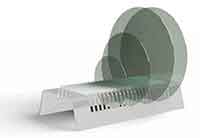
100mm Silicon Carbide Wafer Technical Specifications
The following specifications represent typical parameters for premium-quality 100 mm silicon carbide wafers. Critical measurements such as bow, warp, TTV, resistivity, and dislocation density directly impact device yield and overall semiconductor performance.
Advanced quality control methods are used throughout wafer production to minimize micropipes, basal plane dislocations (BPD), threading screw dislocations (TSD), and threading edge dislocations (TED). These defect reductions help improve reliability in high-current and high-voltage power devices.
| Specification | Standard | Select | Ultra |
|---|---|---|---|
| Diameter (mm) | 99.7 – 100 | ||
| Thickness (µm) | 330 – 370 | ||
| Primary Flat Length (mm) | 31.50 – 34 | ||
| Bow (µm) | ±20 | ||
| Warp (µm) | ≤30 | ||
| TTV (µm) | ≤5 | ||
| SBIR (µm) | ≤2 | ||
| Foreign Polytypes (%) | 0 | ||
| Visible Scratches (µm) | ≤15 | ||
| Resistivity (Ω·cm) | 0.014 – 0.024 | 0.015 – 0.023 | 0.016 – 0.022 |
| Total Usable Area (%) | ≥95 | ≥98 | ≥99 |
| Dislocation Density (cm²) | |||
| EPD (mean) | ≤12,000 | ≤10,000 | ≤8,000 |
| TED (mean) | ≤9,000 | ≤8,000 | ≤6,000 |
| TSD (mean) | ≤1,000 | ≤800 | ≤500 |
| BPD (mean) | ≤2,000 | ≤1,500 | ≤1,000 |
| MPD (cm⁻²) | ≤0.5 | ≤0.2 | ≤0.1 |
Usable area measurements are determined using advanced wafer inspection systems that evaluate surface defects, micropipes, and crystal quality. These measurements help researchers and manufacturers maximize die yield and reduce production losses.
Dislocation density measurements are performed using KOH etching and radial inspection techniques to verify crystal quality throughout the silicon carbide boule and wafer manufacturing process.