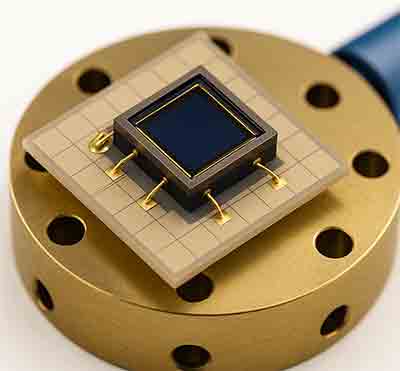
A Ph.D in material science is researching probing elusive light-driven phenomena in quantum-engineered materials and unlocking the next-generation photonic, polaritonic, optoelectronics.
Our research is about probing elusive light-driven phenomena in quantum-engineered materials and unlocking the next-generation photonic, polaritonic, optoelectronic, and quantum devices. Our current work necessitates the acquisition of specific substrates that meet our stringent standards, prompting this inquiry regarding certain glass products. To ensure we have the most pertinent information and cost details, I would like to request the following:
1) We are interested in receiving a quotation for Single Crystal Quartz (ID: 2298) and Sapphire (ID: 2562). As our first engagement with your company, we plan to purchase only one unit of each for an initial assessment of their suitability for our experiments.
2) Given our wide spectrum of light usage, ranging from UV to IR, we place significant importance on the transmittance properties of the aforementioned products (ID: 2298, 2562). Can you provide additional information on their UV to IR transmission characteristics?
3) In addition, we have an interest in acquiring a SiO2/Si wafer. As with the previous items, we would like to purchase just one unit for a preliminary evaluation. Please include a quotation for this product alongside the quotes for items 1).
4) We are also interested in understanding whether there are any discounts available for new research groups or any educational discounts offered by your company. As we embark on our research journey, a beneficial collaboration with your organization holds significant value for us, given our anticipated ongoing requirements for a reliable supply of materials. We greatly appreciate your consideration of our unique situation. We are eager to establish a mutually beneficial relationship with your company as we continue to advance our research endeavors. Thank you for your time and attention, and I look forward to your response.
Reference #278231 for specs and pricing.
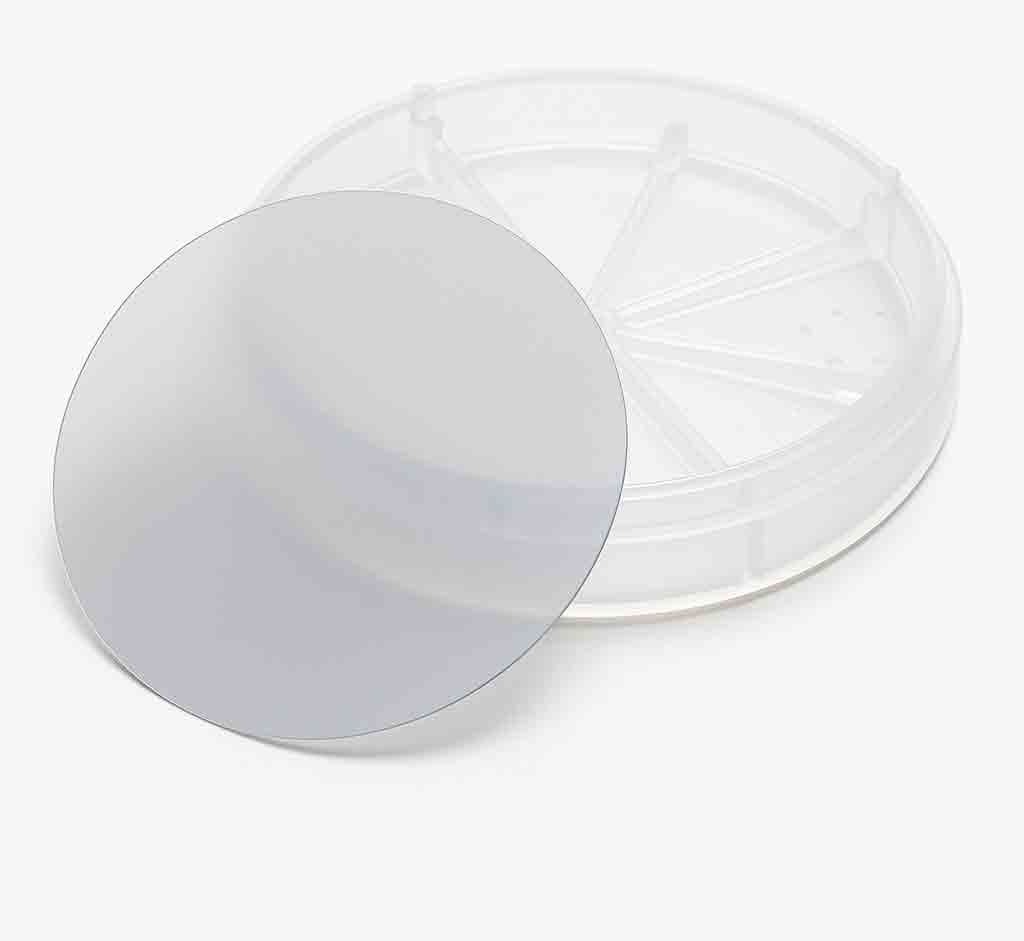
These thin slices of synthetic sapphire play a crucial role in creating advanced electronic devices that use light. Let's explore affordable sapphire wafers and how they're shaping the future of technology, from high-performance LEDs to cutting-edge semiconductor devices and beyond.
Get Your Quote FAST! Or, Buy Onlineand Start Researching Today!
Key Sapphire Wafer Takeaways
Aspect
Details
Composition
Aluminum oxide (Al2O3)
Key Properties
Hardness, optical clarity, thermal conductivity
Main Applications
LED manufacturing, semiconductor devices, optical windows
Advantages
Durability, wide light transmission range, chemical inertness
Future Trends
Larger wafer sizes, new applications, improved manufacturing
What Are Sapphire Wafers?
Sapphire wafers are thin, disc-shaped pieces of synthetic sapphire. They're made from aluminum oxide (Al2O3) and are incredibly hard - ranking 9 on the Mohs scale, just below diamond! These wafers serve as a foundation for building various optoelectronic devices. The unique crystal structure of sapphire, combined with its exceptional purity, makes it an ideal material for applications requiring both optical transparency and mechanical strength. Sapphire wafers can be produced in various sizes and thicknesses, typically ranging from 2 inches to 8 inches in diameter, with thicknesses from a few hundred microns to several millimeters.
Key Properties of Sapphire Wafers
Sapphire wafers have some amazing properties that make them perfect for optoelectronic applications:
Chemical Composition
Al2O3 (Aluminum Oxide)
Crystal Structure
Hexagonal
Optical Transparency
UV to IR
These properties make sapphire wafers ideal for use in various optoelectronic devices. They can withstand high temperatures, resist scratches, and allow light to pass through easily. This makes them perfect for LED manufacturing and other light-based technologies. The thermal stability of sapphire wafers also makes them suitable for high-power electronic devices, as they can efficiently dissipate heat and maintain their structural integrity under extreme conditions.
How Are Affordable Sapphire Wafers Made?
Creating affordable sapphire wafers involves several steps:
Crystal Growth: Large sapphire crystals are grown using special techniques like the Kyropoulos method. This process involves melting high-purity aluminum oxide and carefully cooling it to form a single crystal.
Cutting: The crystals are sliced into thin wafers using diamond wire saws. This step requires precision to ensure uniform thickness and minimize waste.
Polishing: The wafers are carefully polished to create a smooth, flat surface. This often involves multiple stages of polishing with increasingly fine abrasives.
Quality Control: Each wafer is inspected to ensure it meets high standards. This includes checks for defects, thickness uniformity, and surface quality.
Manufacturers are always working to improve these processes, making sapphire wafers more affordable without sacrificing quality. This helps bring down the cost of many electronic devices we use every day. Recent advancements include the development of larger crystal growth chambers, allowing for the production of bigger wafers, and improved cutting techniques that reduce material waste. Additionally, automated inspection systems are being implemented to enhance quality control while reducing labor costs.
Applications of Affordable Sapphire Wafers in Optoelectronics
Sapphire wafers are used in many exciting applications:
Applications of Sapphire Wafers in Optoelectronics
LED Manufacturing
Semiconductor Devices
Optical Windows and Lenses
Sensors and Detectors
Key Points about Sapphire Wafers
Sapphire wafers are made of aluminum oxide (Al2O3) and are very hard and durable.
They have excellent optical properties, allowing light to pass through from ultraviolet to infrared wavelengths.
Sapphire wafers can withstand very high temperatures, up to about 2000°C.
They are chemically stable and resist damage from most acids and chemicals.
The most common use for sapphire wafers is in making LEDs, especially for blue and white light.
Now, let's explore each application of sapphire wafers in more detail:
1. LED Manufacturing
Sapphire wafers are widely used as a base for making LED (Light Emitting Diode) substrates. LEDs are energy-efficient light sources found in many devices, from smartphones to car headlights. The transparent and durable nature of sapphire makes it perfect for growing the special materials needed to create bright, long-lasting LEDs. The lattice structure of sapphire provides an ideal foundation for epitaxial growth of gallium nitride (GaN), the key material in blue and white LEDs. This compatibility has been crucial in the development of high-brightness LEDs that have revolutionized lighting technology.
2. Semiconductor Devices
In the world of semiconductor wafers, sapphire plays an important role. It's used to create high-performance electronic components that can operate at high frequencies and withstand extreme conditions. This makes sapphire wafers valuable in creating advanced computer chips and communication devices. The insulating properties of sapphire make it particularly useful in silicon-on-sapphire (SOS) technology, where a thin layer of silicon is grown on a sapphire substrate. This technology is used in high-frequency applications and radiation-hardened circuits for aerospace and military use.
3. Optical Windows and Lenses
Thanks to its clarity and durability, sapphire is excellent for making optical windows and lenses. These components are used in various devices, from barcode scanners to high-powered lasers. Sapphire's ability to transmit a wide range of light wavelengths makes it versatile for many optical applications. In addition to its optical properties, sapphire's hardness makes it ideal for use in harsh environments. For example, sapphire windows are used in deep-sea cameras and high-pressure chemical reactors where other materials would fail.
4. Sensors and Detectors
Sapphire wafers are also used in creating sensitive light detectors and sensors. These devices can measure light levels, detect specific colors, or even sense the presence of certain chemicals. The stability and optical properties of sapphire make it ideal for these precise instruments. In the field of spectroscopy, sapphire-based sensors are used to analyze the composition of materials in various industries, from pharmaceuticals to environmental monitoring. The wide bandgap of sapphire also makes it useful in creating UV sensors for applications like water purification systems and solar radiation monitoring.
Advantages of Using Sapphire Wafers in Optoelectronics
Sapphire wafers offer several benefits for optoelectronic applications:
High Thermal Conductivity: Sapphire can handle heat well, which is important for electronic devices that generate a lot of heat. This property allows for better heat dissipation in high-power devices, improving their efficiency and lifespan.
Excellent Optical Transmission: Sapphire allows a wide range of light wavelengths to pass through, making it versatile for different optical applications. Its transparency from ultraviolet to infrared wavelengths enables its use in a variety of sensing and imaging technologies.
Mechanical Strength: The hardness of sapphire makes devices more durable and resistant to scratches. This is particularly valuable in consumer electronics and industrial applications where devices may be exposed to harsh conditions.
Chemical Inertness: Sapphire doesn't react with most chemicals, which helps protect the delicate components built on it. This property is crucial in applications involving corrosive environments or in biomedical devices where material stability is essential.
Lattice Matching: The crystal structure of sapphire is well-suited for the epitaxial growth of certain semiconductor materials, particularly gallium nitride. This compatibility has been key to the development of efficient blue LEDs and high-frequency electronic devices.
Comparing Sapphire Wafers with Alternative Materials
While sapphire wafers are excellent for many applications, it's important to understand how they compare to other materials:
Material
Thermal Conductivity
Optical Transparency
Cost
Sapphire
High
Excellent
Moderate
Silicon
Moderate
Poor
Low
Gallium Nitride
High
Good
High
This comparison shows that while sapphire may be more expensive than silicon, its unique properties make it the best choice for many optoelectronic applications. The challenge for manufacturers is to keep improving production methods to make sapphire wafers more affordable without losing their amazing qualities. Recent advancements in sapphire growth techniques, such as the Kyropoulos method and edge-defined film-fed growth (EFG), have significantly reduced production costs while maintaining high quality. This has made sapphire more competitive in applications where its optical and thermal properties offer significant advantages over other materials.
The Future of Affordable Sapphire Wafers in Optoelectronics
As technology advances, the demand for affordable sapphire wafers is likely to grow. Researchers and manufacturers are working on several exciting developments:
Larger Wafer Sizes: Creating bigger sapphire wafers can help reduce costs and improve manufacturing efficiency. Current research is focused on producing 12-inch (300mm) sapphire wafers, which could significantly reduce the cost per device.
New Applications: Scientists are finding new ways to use sapphire in emerging technologies like 5G networks and advanced sensors. For example, sapphire is being explored for use in quantum computing applications due to its unique optical and thermal properties.
Improved Manufacturing: New techniques for growing and processing sapphire crystals could make wafers even more affordable and higher quality. Advancements in crystal growth methods, such as the use of automated control systems and improved furnace designs, are leading to more consistent and higher-quality sapphire production.
Surface Modifications: Research is ongoing into methods of modifying the surface of sapphire wafers to enhance their properties for specific applications. This includes techniques like ion implantation and nanostructuring to improve light extraction in LEDs or to create more sensitive biosensors.
Integration with Other Materials: Scientists are exploring ways to combine sapphire with other materials to create hybrid substrates with enhanced properties. This could lead to new types of devices that take advantage of the best qualities of multiple materials.
These advancements could lead to more efficient LEDs, faster electronic devices, and new technologies we haven't even imagined yet! The potential applications range from more energy-efficient lighting and displays to advanced medical imaging devices and next-generation communication systems.
Conclusion
Affordable sapphire wafers are playing a crucial role in shaping the future of optoelectronics. Their unique combination of hardness, optical clarity, and thermal properties makes them ideal for a wide range of applications, from everyday LEDs to cutting-edge semiconductor devices. The ongoing research into improving sapphire wafer production and expanding its applications promises to keep this material at the forefront of technological innovation for years to come.
As manufacturing techniques improve and new applications are discovered, we can expect to see sapphire wafers becoming even more important in the world of technology. The ongoing efforts to make these wafers more affordable will help drive innovation and bring advanced optoelectronic devices to more people around the world. This could lead to breakthroughs in fields such as renewable energy, telecommunications, and medical technology, potentially improving lives and addressing global challenges.
The next time you use your smartphone, turn on an LED light, or benefit from a high-tech sensor, remember that a thin slice of synthetic sapphire might be working behind the scenes, helping to make that technology possible! As we continue to push the boundaries of what's possible in optoelectronics, sapphire wafers will undoubtedly play a key role in shaping our technological future.

 quantum-engineered materials and unlocking the next-generation photonic, polaritonic, optoelectronic, and quantum devices. Our current work necessitates the acquisition of specific substrates that meet our stringent standards, prompting this inquiry regarding certain glass products. To ensure we have the most pertinent information and cost details, I would like to request the following: