
Germanium (Ge) Wafers and Substrates
UniversityWafer, Inc. supplies Germanium (Ge) substrates for semiconductor research, infrared optics, photonics, solar cell development, detectors, and advanced electronic devices. Germanium is valued for its high carrier mobility, narrow bandgap, and strong infrared transmission properties.
We offer both electrical grade germanium and optical grade germanium wafers in stock.
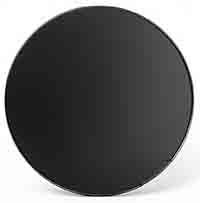 Available sizes range from small pieces under 10 mm to full 150 mm germanium wafers.
Germanium substrates are available with multiple orientations, dopants, resistivity ranges, thicknesses, and polish options, including single-side polished (SSP), double-side polished (DSP), undoped, n-type, and p-type Ge wafers.
Get your Germanium Wafer Quote FAST! Or, Buy Online and start researching today!
Useful Germanium Substrate Properties
Germanium is a high-mobility semiconductor material often compared with silicon (Si), gallium arsenide (GaAs), and indium arsenide (InAs) for CMOS, photodetector, optoelectronic, and infrared device research.
- Germanium bandgap: 0.66 eV
- Electron mobility at 300 K: 3,900 cm²/(V·s)
- Hole mobility at 300 K: 1,900 cm²/(V·s)
- Maximum electron velocity: 0.6 × 10⁷ cm/s
- Critical electric field: 0.1 × 10⁶ V/cm
These properties make germanium useful for high-speed semiconductor devices, infrared sensors, photovoltaic research, and epitaxial growth applications.
Germanium Substrates for Semiconductor, Infrared, and Photonics Research
Germanium (Ge) substrates are widely used in semiconductor manufacturing, infrared optics, photodetectors, solar cell development, photonics, and advanced CMOS research. Compared to silicon, germanium offers significantly higher electron and hole mobility, making it an attractive material for high-speed electronic devices and next-generation transistor architectures.
UniversityWafer, Inc. supplies both optical-grade and electrical-grade germanium wafers in a variety of diameters, orientations, dopant types, resistivities, thicknesses, and surface finishes. Standard inventory includes SSP, DSP, undoped, and doped germanium substrates suitable for research, prototyping, and production environments.
Germanium Wafer Inventory
The following table highlights a selection of germanium substrates currently available from stock. Additional specifications, custom thicknesses, orientations, and polishing options may also be available upon request. Contact us if your requirements are not listed below.
| Item | Dia (mm) | Type / Dopant | Orientation | Resistivity (Ω·cm) | Thickness (μm) | Polish |
|---|---|---|---|---|---|---|
| 2477 | 50.8 | N/Sb | (100) | 0.01-0.02 | 500 | SSP |
| 2478 | 50.8 | Undoped | (100) | >50 | 500 | SSP |
| 2479 | 50.8 | Undoped | (100) | >50 | 500 | DSP |
| 2480 | 50.8 | N/Sb | (110) | 0.35-0.4 | 500 | SSP |
| 2481 | 50.8 | Undoped | (111) | >50 | 500 | SSP |
| 2482 | 50.8 | P/Ga | (100) | 1-10 | 500 | SSP |
| 2575 | 50.8 | P/B | (100) | 0.01-0.1 | 500 | SSP |
| 1927 | 100 | P/Ga | <100> 6° toward <111> | 0.01-0.05 | 175 | SSP |
| 1928 | 150 | P/Ga | <100> 6° toward <111> (Epi Ready) | 0.008-0.05 | 225 | SSP |
Germanium Material Properties Compared to Silicon, GaAs, and InAs
Germanium occupies an important position between traditional silicon technology and compound semiconductors. Its relatively narrow bandgap and high carrier mobility make it valuable for high-speed electronics, infrared imaging systems, optical sensors, and heterostructure device research.
One of germanium's key advantages is its carrier mobility. Electron mobility is nearly three times greater than silicon, while hole mobility is more than four times higher. These characteristics can improve switching performance and device speed in advanced semiconductor designs.
Germanium also exhibits strong infrared transmission properties, making it a preferred material for thermal imaging optics, infrared windows, spectroscopy systems, and photonic devices operating in the infrared spectrum.
Thermal Conductivity and Electronic Properties Comparison
The table below compares germanium with silicon, gallium arsenide (GaAs), and indium arsenide (InAs). These material properties are commonly evaluated when selecting substrates for CMOS devices, infrared detectors, optoelectronics, and high-performance semiconductor applications.
| Property | Silicon (Si) | Germanium (Ge) | Gallium Arsenide (GaAs) | Indium Arsenide (InAs) | Unit |
|---|---|---|---|---|---|
| Bandgap | 1.12 | 0.66 | 1.42 | 0.35 | eV |
| Electron Mobility (300 K) | 1,350 | 3,900 | 8,500 | 40,000 | cm²/(V·s) |
| Hole Mobility (300 K) | 450 | 1,900 | 400 | 500 | cm²/(V·s) |
| Maximum Electron Velocity | 1 | 0.6 | 2 | 3.5 | ×10⁷ cm/s |
| Critical Electric Field | 0.25 | 0.1 | 0.004 | 0.002 | ×10⁶ V/cm |
| Thermal Conductivity | 1.5 | 0.58 | 0.5 | 0.27 | W/(cm·K) |
Applications of Germanium Substrates
- Infrared optics and thermal imaging systems
- Photodetectors and optical sensors
- High-speed CMOS and transistor research
- Photonics and optoelectronic devices
- Multi-junction solar cells
- Epitaxial growth platforms
- Semiconductor process development
- Advanced materials and university research programs