Germanium Lowest Dislocation
A PhD Chemistry requested a quote for the following.
I'm contacting you for a request about Ge wafers. We have very strict requirements about the Ge wafer features. I'd need Ge wafers with the lowest possible amount of dislocations (EPD<10) , purity is not a concern in this case. On the contrary, a low electrical resistance should be advisable (< 1 ohm-cm). The orientation is another major critical point: we need <111> crystals, with a very low orientation tolerance (possibly 0.5°).
The diameter should be 100 mm, the thickness 1 mm. Is it possible for you to provide this type of crystals?
Reference #101282 for specs and pricing.
Get your Electrical Grade Germanium (Ge) Quote FAST! Buy online and start researching today!
Germanium Wafers With HIgher Seeback Coefficient
A postdoc requested a quote for the following.
We are interested in some doped germanium wafer for our experiment. If possible, could you please let me know what kind of doped-germanium wafer you have?
The electrical resistivity looks good to me for this
p-type germanium, but we prefer n-type germanium wafer as it has higher Seebeck coefficient. Do you have any in stock?
Reference #109569 for specs and pricing.
Germanium Applications
An Electrical Engineering PhD candidate requested a quote for the following.
Scroll down to learn more about how Ge can help your research.
I would like to get a price quote for 5 electrical grade Germanium
wafers (GEV4100U). In addition to that, I would like to get a price quot
for two 4inch SOI <100> wafers.
Do you also have Germanium on Insulator (GOI) wafers?
Reference #90161 for specs and pricing.
Electrical Contacts on Germanium
A chemistry research scientist requested a quote for the follwoing.
Does university wafer or any company you know of put back contacts on
wafers? We are specifically interested in electrical contacts on Ge.
We want gold back contacts with good electrical conductivity on n-GaAs, p-GaAs, and Ge wafers.
Could you give me some detail as to the techniques you use to apply the contact? We would like to apply a 10nm Ti adhesion layer and on top of that a 100nm Au layer. The wafers need to be chemically etched before application of the contact, is this possible? the wafers are 2 inches in diameter. how many wafers can you do at a time?
UniversityWafer, Inc. Quoted:
Normally we make Ohmic contacts to n-type GaAs by Electron Beam Evaporation. We use a special target of an alloy of Germanium and Gold, designed for this purpose. Then we do Rapid Thermal Annealing to diffuse the alloy into GaAs. We do not use a Ti adhesion layer as one would on Silicon. Some suggest that a thin layer of Nickel promotes the bond to GaAs and lowers contact resistance but we have no experience with that. We do at least 5 of 2" wafers at a time.
Reference #139306 for specs and pricing.
Important Germanium Wafer Keywords
- Buy electrical grade germanium wafer
- Germanium wafers for infrared detectors
- N-type germanium wafer
- P-type Ge substrate
- Germanium wafer for semiconductors
- Germanium on silicon wafer
- Ge wafers for solar
Electrical Germanium Substrates Inventory
We have both electrical grade and optical grade germanium wafers in stock. Sizes range from < 10mm 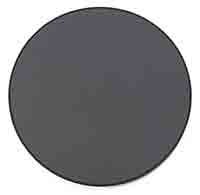 square to 150mm.
Below are just some of the germanium wafers that we have in stock. If you don't see what you need please email use your spec for pricing and delivery.
| Item |
Dia (mm) |
Typ/Dop |
Ori |
Res ohm-cm |
Thk (μm) |
Pol |
| 2477 |
50.8 |
N/Sb |
(100) |
0.01–0.02 |
500 |
SSP |
| 2478 |
50.8 |
Undoped |
(100) |
>50 |
500 |
SSP |
| 2479 |
50.8 |
Undoped |
(100) |
>50 |
500 |
DSP |
| 2480 |
50.8 |
N/Sb |
(110) |
0.35–0.4 |
500 |
SSP |
| 2481 |
50.8 |
Undoped |
(111) |
>50 |
500 |
SSP |
| 2482 |
50.8 |
P/Ga |
(100) |
1–10 |
500 |
SSP |
| 2575 |
50.8 |
P/B |
(100) |
0.01–0.1 |
500 |
SSP |
| 1927 |
100mm |
P/Ga |
<100> 6° towards <111> ± 0.5° |
0.01–0.05 |
175 |
SSP |
| 1928 |
150mm |
P/Ga |
<100> 6° towards <111> ± 0.5° Epi ready |
0.008–0. |
|
|
What are Electrical Grade Germanium Wafers?
Electrical grade germanium wafers are high-purity single-crystal wafers specifically manufactured for electronic and semiconductor applications where excellent electrical characteristics are required. These wafers are distinct from optical-grade germanium, which is used in infrared (IR) optics and photonics.
🔍 Key Features of Electrical Grade Germanium Wafers:
| Property |
Description |
| Purity |
Typically > 6N (99.9999%) to 8N (99.999999%) for minimal impurities. |
| Crystal Orientation |
Commonly <100> or <111> depending on application needs. |
| Doping |
Can be n-type (usually doped with phosphorus, antimony) or p-type (boron or gallium), depending on desired conductivity. Intrinsic (undoped) options also available. |
| Resistivity |
Precisely controlled; low resistivity (~0.001–10 ohm·cm) for active electronics, or high for detector applications. |
| Surface Finish |
Double-side polished (DSP) for photodetectors and FETs, or single-side polished (SSP) for simpler device layers. |
⚙️ Applications of Electrical Grade Germanium:
-
Infrared Detectors – Ge’s narrow bandgap (~0.67 eV) makes it ideal for detecting mid-IR radiation.
-
High-Efficiency Solar Cells – Especially in multijunction space solar cells as a bottom layer.
-
High-Speed Electronics – Germanium-on-insulator (GeOI) devices, high-mobility transistors.
-
Thermal Imaging Sensors – Used in military and industrial monitoring systems.
-
Semiconductor Research – As a model substrate for studying quantum effects or developing Si-Ge heterostructures.
🏢 Who Uses Electrical Grade Germanium Wafers?
-
Semiconductor device engineers
-
Infrared detector manufacturers
-
Solar energy researchers
-
Government and aerospace labs
-
Quantum computing research teams
If you're looking to source electrical-grade germanium wafers, UniversityWafer, Inc. offers a range of diameters, thicknesses, and doping types tailored to research and commercial applications.