Researching Polar Materials Optical Properties
A PhD student requested a quote for the following.
I'm interested in doing a research on the optical properties of surface phonon polariton which can exist in polar materials such as 6H-SiC.
t sounds like I need the "2",6H, semi-transparent SIC for optical application" but just to make sure, can you please send me some kind of data-sheet of the product so I can see if it fits my needs?
Specifically I'm interested in the relative permittivity of the wafer around the wavelengths of 10-12.5 microns. I hope you have this information or you can direct me to it.
I'm looking for wafers with a diameter of about 2 inches.
Do you sell wafers of 6H-SiC in this size?
UniversityWafer, Inc. Replied:
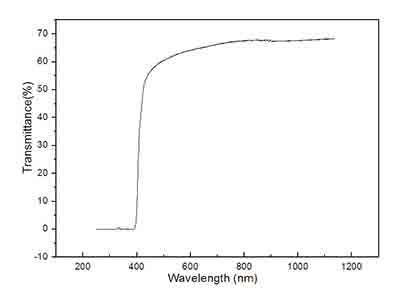
I think you need semi-transparent SIC for optical application, please see below and here for diagram:
2", 6H, Semi-Transparent SiC for optical application.
Reference #224406
for specs and pricing.
If you do, can you please send me a quotation? Get Your Quote FAST! Or, Buy Online and Start Researching Today!
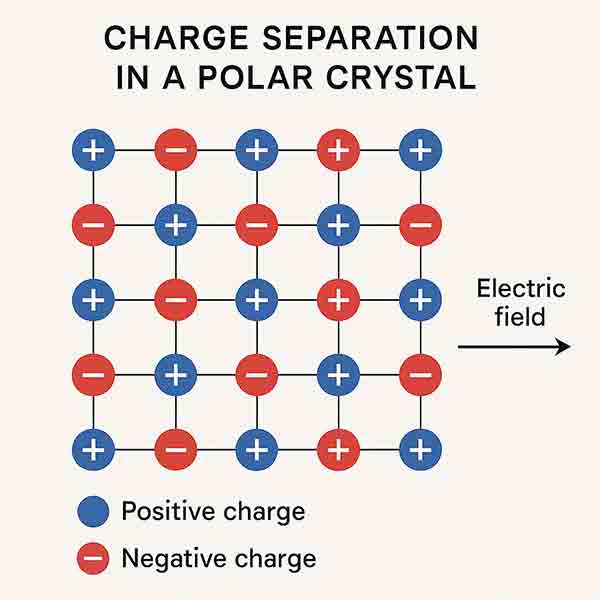
What Are Polar Materials?
Polar materials are materials in which the centers of positive and negative charges do not coincide, resulting in a permanent electric dipole moment. This means the material has a built-in asymmetry in charge distribution, which gives rise to interesting electrical and optical properties.
🔬 Key Characteristics of Polar Materials:
-
Permanent Dipole
Electrons are more concentrated around certain atoms or regions, creating a separation of charge.
-
Asymmetric Structure
Typically found in crystals without inversion symmetry, such as wurtzite or zinc blende structures.
-
Spontaneous Polarization
Even in the absence of an external electric field, these materials can maintain an internal electric field.
-
Strong Interaction with Light and Fields
Useful in nonlinear optics, piezoelectricity, and polaritonics due to their ability to interact with electric and electromagnetic fields.
🧪 Examples of Polar Materials:
| Material |
Property/Use |
| Gallium Nitride (GaN) |
Polar crystal structure; used in LEDs, high-frequency devices |
| Zinc Oxide (ZnO) |
Exhibits piezoelectric and pyroelectric properties |
| Barium Titanate (BaTiO₃) |
Ferroelectric and used in capacitors |
| Water (H₂O) |
Molecular polarity; strong dipole moment |
🔧 Applications:
-
Piezoelectric devices (sensors, actuators)
-
Ferroelectric memory
-
Nonlinear optics
-
Surface phonon polaritons and plasmonics
-
Polariton lasers and light-matter interaction research