
I am a PhD student and currently using your ITO glass substrates to fabricate dye-sensitized solar cells. I wonder what is the thickness of the ITO layer on the glass? I use the 1.1 mm thick rectangular glass slides.
ITO Glass Substrates for Dye-Sensitized Solar Cells
A PhD researcher developing dye-sensitized solar cells (DSSCs) requested information regarding the conductive coating on our ITO glass substrates.
Indium tin oxide (ITO) coated glass is widely used in photovoltaic devices, DSSCs, OLED displays, sensors, and optoelectronic applications because of its excellent electrical conductivity and optical transparency. Researchers frequently utilize ITO substrates as transparent electrodes for harvesting solar energy and studying charge transport mechanisms.
Please reference #221838 for specifications and pricing.
Get Your Quote FAST! Or, Buy Online and Start Researching Today!
Underwater Solar Cells for Marine Energy Harvesting
Researchers investigating underwater renewable energy requested high-efficiency photovoltaic devices optimized for operation beneath the water surface.
Our group focuses on harvesting solar energy underwater. We are looking for photovoltaic cells having a bandgap between 1.8 eV and 2.3 eV. Preferred materials include Indium Gallium Phosphide (InGaP) and Gallium Arsenide (GaAs).
 After reviewing water absorption spectra and semiconductor bandgap requirements, we recommended high-performance GaAs and GaInP dual-junction (DJ) and triple-junction (TJ) solar cells.
Because infrared radiation is strongly absorbed by water, conventional germanium junctions contribute little to overall efficiency beyond shallow depths. For deeper underwater applications, dual-junction structures provide excellent performance with minimal efficiency loss.
Applications for underwater photovoltaic technology include:
- Autonomous underwater vehicles (AUVs)
- Marine sensors and monitoring systems
- Oceanographic research equipment
- Remote power generation
- Underwater communication systems
- Defense and naval applications
Recommended Solar Cell Solution
| Item | Description |
|---|---|
| HF91 | Dual-Junction or Triple-Junction Solar Cells optimized for 1.8 eV to 2.3 eV bandgap applications. Minimum order: 10 cells, 12V output, panel size <1 m². |
| HF91b | Special underwater encapsulation with waterproof electrical connectors, anti-algae coating, and enhanced corrosion resistance. |
| HF91c | Fresnel lens concentrator module mounted on the panel to improve solar energy collection efficiency. |
Reference #257878 for specifications and pricing.
What Are Dye-Sensitized Solar Cells (DSSCs)?
Dye-sensitized solar cells (DSSCs), also known as Grätzel cells, are a type of thin-film photovoltaic technology that converts sunlight into electricity using a photosensitive dye and a semiconductor layer. Unlike traditional crystalline silicon solar cells, DSSCs are designed to offer low manufacturing costs, flexibility, and excellent performance under indoor and low-light conditions.
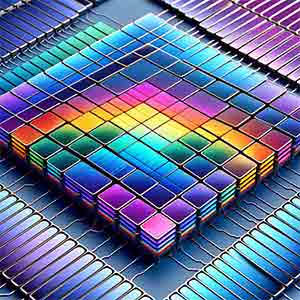 These devices typically employ nanostructured titanium dioxide (TiO₂), conductive glass, and organic or metal-complex dyes to harvest solar energy. Their transparency and lightweight design make them attractive for building-integrated photovoltaics (BIPV), portable electronics, sensors, and next-generation renewable energy systems.
How Dye-Sensitized Solar Cells Work
A DSSC consists of a porous semiconductor layer coated with light-absorbing dye molecules. When sunlight strikes the dye, electrons are excited and injected into the semiconductor, usually titanium dioxide or zinc oxide. These electrons flow through an external circuit, producing electrical power, while an electrolyte regenerates the dye to complete the cycle.
The key components of a dye-sensitized solar cell include:
- Photoanode based on TiO₂ nanoparticles or metal oxides
- Photosensitive dye molecules that absorb visible light
- Electrolyte containing redox couples
- Counter electrode coated with platinum or conductive polymers
- Transparent conductive substrates such as ITO or FTO glass
This architecture enables efficient charge transport and allows DSSCs to operate effectively under diffuse and indoor lighting conditions.
Titanium Dioxide in DSSC Research
Titanium dioxide (TiO₂) is the most widely used semiconductor material in dye-sensitized solar cells due to its chemical stability, low cost, and favorable electronic properties. TiO₂ nanoparticles provide a large surface area for dye adsorption, improving light harvesting and increasing conversion efficiency.
Researchers continue investigating methods to enhance TiO₂ performance through:
- Nanostructured and mesoporous architectures
- Surface modification techniques
- Metal nanoparticle incorporation
- Doping and defect engineering
- UV-visible absorption optimization
These developments have helped DSSCs achieve efficiencies exceeding 13%, making them competitive among third-generation photovoltaic technologies.
Metal Oxides Used in Dye-Sensitized Solar Cells
In addition to TiO₂, several metal oxides are being explored to improve charge transport and energy conversion. Materials such as zinc oxide (ZnO), tin oxide, and composite oxide structures offer unique advantages for increasing open-circuit voltage and reducing electron recombination.
Researchers have demonstrated that controlling doping concentrations and crystal structures can significantly influence photovoltaic performance. Advanced metal oxide architectures continue to play a critical role in improving the efficiency and stability of DSSCs.
Natural and Synthetic Photosensitizers
The photosensitizer is responsible for absorbing sunlight and generating excited electrons. Modern dye-sensitized solar cells utilize both synthetic metal-complex dyes and naturally derived pigments extracted from fruits and plants.
Co-sensitization techniques allow multiple dyes to absorb different wavelengths of light, expanding the spectral response and increasing power conversion efficiency. Recent studies have shown that advanced co-sensitized devices can achieve excellent performance under both solar illumination and indoor ambient lighting.
Advantages of Dye-Sensitized Solar Cells
- Low-cost manufacturing processes
- High efficiency under low-light conditions
- Flexible and transparent device structures
- Environmentally friendly materials
- Suitable for wearable electronics and smart windows
- Potential for large-area production
These advantages make DSSCs promising candidates for future renewable energy technologies and specialized applications where conventional silicon solar cells may not be ideal.
Current Challenges and Future Developments
Despite their advantages, dye-sensitized solar cells face challenges related to long-term stability, electrolyte leakage, and lower efficiency compared with crystalline silicon photovoltaics. Ongoing research focuses on solid-state electrolytes, advanced semiconductor nanostructures, and new photosensitizers capable of delivering higher efficiencies and longer lifetimes.
As materials science and nanotechnology continue advancing, DSSCs are expected to become increasingly important for sustainable energy harvesting, indoor photovoltaics, and next-generation optoelectronic devices.