What Glass Substrate Do You Need?
Choosing the right glass substrate depends on your optical transmission requirements, wavelength range, thickness, surface quality, and application. Researchers developing optical systems, UV imaging devices, photonics, MEMS, sensors, and semiconductor packaging frequently use BK7 and H-K9L glass wafers because they offer excellent optical clarity, dimensional stability, and cost-effective performance.
A researcher recently requested assistance selecting a glass substrate with moderate UV transmission and high visible-light transparency for optical testing and device development.
Researcher Request:
I am looking for a 100mm diameter, 500µm thick BK7 glass substrate with moderate UV transparency and no coating. Ideally, the substrate would provide approximately 50-60% transmission at 313nm while maintaining greater than 90% transmission at longer wavelengths.
Additional questions included:
- Whether the transmission profile is similar to commercially available BK7 optical windows.
- Availability of thicker BK7 substrates ranging from 1mm to 4.5mm.
- Typical shipping lead times.
- Pricing for a quantity of 10 substrates.
UniversityWafer Recommendation
For applications requiring BK7-like optical performance, we recommended our H-K9L glass wafers, a widely used BK7-equivalent substrate offering excellent optical transmission, low inclusions, and high surface quality for semiconductor and photonic applications.
- Available in 100mm diameter formats
- Suitable for optical, UV, and visible-light applications
- Excellent flatness and polish quality
- Ideal for photonics, sensors, MEMS, and semiconductor packaging
- Available for immediate shipment while inventory lasts
Our inventory currently includes full cassette quantities that can often be shipped immediately to support urgent research and production schedules.
Please reference Quote #271331 for current pricing and availability.
Need BK7, H-K9L, fused silica, Borofloat, or custom glass substrates? Submit your specifications below and our engineering team will recommend the best substrate for your application.
Get Your Glass Substrate Quote FAST! Or, Buy Online and Start Researching Today!
Glass Substrates for Semiconductor and Optical Applications
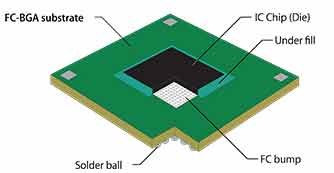 Glass substrates play an increasingly important role in semiconductor manufacturing, photonics, MEMS fabrication, sensors, advanced packaging, and optoelectronic devices. Compared to traditional materials, glass offers excellent dimensional stability, electrical insulation, optical transparency, and chemical resistance, making it an ideal platform for next-generation electronic and optical systems.
Researchers commonly use BK7 glass, fused silica, Borofloat 33, D263 glass, and Gorilla Glass for applications requiring optical transmission, electrical isolation, thermal stability, and smooth surface finishes.
Why Surface Roughness Matters
Surface roughness is one of the most important characteristics of a glass substrate. The quality of a substrate's surface directly impacts thin-film adhesion, optical transmission, device yield, and overall performance.
For semiconductor, MEMS, and photonic devices, low surface roughness can improve:
- Thin-film uniformity
- Optical clarity and transmission
- Photolithography performance
- Wafer bonding strength
- Device reliability
- Reduced scattering losses
Researchers often use profilometry and atomic force microscopy (AFM) to characterize glass substrate surfaces and verify roughness specifications before fabrication.
Glass Substrates for Wafer Bonding
Glass wafers are widely used in wafer bonding applications, particularly for MEMS devices, sensors, microfluidics, and silicon-on-glass structures. The electrical insulation properties of glass make it an attractive alternative to traditional semiconductor substrates in applications where parasitic capacitance must be minimized.
Anodic bonding is one of the most common methods used to permanently bond silicon wafers to glass substrates. This process creates strong, hermetic seals that are widely used in pressure sensors, accelerometers, MEMS devices, and microfluidic systems.
Silicon-on-Glass (SOG) Technology
Silicon-on-glass (SOG) technology combines the electrical performance of silicon with the insulating properties of glass. These structures are commonly used in RF devices, display technologies, MEMS sensors, photonics, and advanced semiconductor packaging.
Benefits of SOG substrates include:
- Improved electrical isolation
- Lower parasitic capacitance
- Enhanced RF performance
- Reduced signal loss
- Excellent optical transparency
- Compatibility with advanced packaging technologies
Preventing Defects in Glass-Based Structures
During semiconductor processing, defects such as pinholes, voids, and interface irregularities can affect device performance. Manufacturers often use barrier layers such as silicon dioxide (SiO2) and silicon nitride (Si3N4) to improve bonding quality and prevent contamination from migrating into active device regions.
Proper surface preparation, cleaning, oxidation, and thin-film deposition techniques help reduce defect formation and improve manufacturing yields.
Applications of Glass Substrates
- Semiconductor packaging
- MEMS devices
- Microfluidic chips
- Optical sensors
- Photonics and integrated optics
- Display technologies
- Biomedical devices
- RF and microwave electronics
- Wafer-level packaging
- Flexible electronics research
Future Growth of Glass Substrates
The demand for advanced glass substrates continues to grow as semiconductor manufacturers seek materials that offer superior electrical isolation, optical performance, and compatibility with heterogeneous integration. Emerging technologies such as AI processors, advanced packaging, photonic integrated circuits, augmented reality devices, and high-speed communication systems are expected to further accelerate the adoption of glass-based substrate technologies.
UniversityWafer, Inc. supplies a wide variety of glass wafers and optical substrates including BK7, H-K9L, Borofloat 33, fused silica, D263, soda lime glass, and custom glass substrate solutions for research and production applications.
Related Glass Substrate Resources
