
"We suddenly have a need for a few 6" silicon wafers. I would like to get 5 pieces. Lot #3175 or Lot #478 would be fine, but we could accept any available lot that can be shipped immediately."
Silicon Wafers for Semiconductor Engineers
Semiconductor engineers rely on high-quality silicon wafers to develop integrated circuits, MEMS devices, sensors, photonic components, power electronics, and advanced semiconductor technologies. Whether working in research laboratories, university cleanrooms, or high-volume fabrication facilities, engineers require substrates with precise specifications, fast delivery, and consistent material quality.
A Senior Semiconductor Engineer Requested:
UniversityWafer Response:
Reference Quote #239225 for specifications, availability, and pricing. We maintain an extensive inventory of silicon substrates, including prime-grade, test-grade, DSP, SSP, SOI, and specialty wafers for semiconductor engineering applications.
Get Your Quote FAST! Or, Buy Online and Start Your Research Today!
How Semiconductor Engineers Use Silicon Wafers
Semiconductor engineers transform silicon wafers into electronic devices through a series of highly controlled fabrication processes. These manufacturing steps are used to create microprocessors, memory devices, sensors, RF components, power semiconductors, and photonic integrated circuits.
-
Wafer Preparation
The wafer surface is cleaned, polished, and inspected to remove contamination and defects before fabrication begins. -
Photolithography
Circuit patterns are transferred onto the wafer using photoresist materials and advanced optical exposure systems. -
Etching
Selective material removal creates the microscopic structures required for semiconductor devices. -
Doping and Ion Implantation
Controlled impurities are introduced into the silicon crystal to create regions with specific electrical properties. -
Thin Film Deposition
Materials such as oxides, nitrides, polysilicon, and metals are deposited to form device layers and interconnections. -
Testing and Metrology
Engineers verify device performance, monitor critical dimensions, and optimize manufacturing yield.
Throughout semiconductor fabrication, engineers carefully control temperature, pressure, contamination levels, chemical concentrations, and process parameters to ensure reliable device performance and high production yields.
What Does a Semiconductor Engineer Do?
A semiconductor engineer designs, develops, tests, and improves semiconductor devices used in computers, smartphones, automotive electronics, telecommunications equipment, medical devices, artificial intelligence systems, and advanced research applications. These engineers work with silicon wafers, compound semiconductors, thin films, photolithography equipment, deposition systems, and semiconductor packaging technologies to manufacture integrated circuits and microelectronic devices.
Semiconductor engineers play a critical role throughout the semiconductor manufacturing process, from wafer selection and device design to fabrication, testing, packaging, and yield optimization. Their work helps improve chip performance, reduce power consumption, and increase manufacturing efficiency.
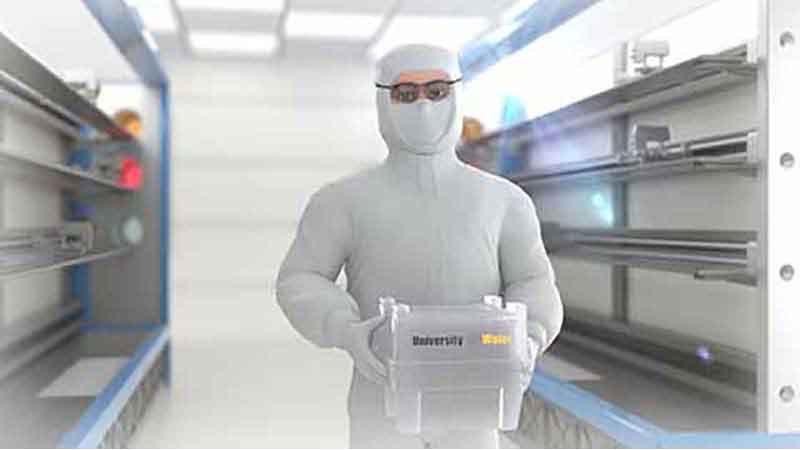
How Semiconductor Engineers Use Silicon Wafers
Most semiconductor devices begin with high-purity silicon wafers. Engineers use these substrates to fabricate transistors, integrated circuits, MEMS devices, sensors, power electronics, and photonic components.
Key wafer fabrication processes include:
- Wafer Cleaning: Removing particles and contaminants before processing.
- Photolithography: Transferring circuit patterns onto the wafer surface.
- Etching: Creating device structures by selectively removing material.
- Doping: Modifying electrical properties using controlled impurities.
- Thin Film Deposition: Depositing metals, oxides, nitrides, and other functional layers.
- Metrology and Inspection: Monitoring critical dimensions and defect levels.
- Packaging and Testing: Verifying performance and reliability before deployment.
Types of Semiconductor Engineering Careers
The semiconductor industry offers several engineering career paths, each focused on a different stage of chip development and manufacturing.
Process Engineer
Semiconductor process engineers develop and optimize fabrication processes such as oxidation, diffusion, ion implantation, deposition, CMP, and plasma etching. Their primary goal is improving device performance, yield, and manufacturing efficiency.
Test Engineer
Semiconductor test engineers design and execute electrical testing procedures that verify chip functionality, reliability, and performance. They work with automated test equipment (ATE), wafer probing systems, and statistical process control tools.
Design Engineer
Design engineers create integrated circuits, microprocessors, memory devices, RF components, and custom semiconductor solutions using advanced electronic design automation (EDA) software.
Packaging Engineer
Packaging engineers develop methods to protect semiconductor devices while improving electrical performance, thermal management, and long-term reliability.
Semiconductor Engineer Salary and Career Outlook
Demand for semiconductor engineers continues to grow as industries increasingly rely on artificial intelligence, autonomous vehicles, 5G communications, cloud computing, advanced sensors, and power electronics. Engineers with experience in semiconductor manufacturing, wafer fabrication, photonics, MEMS, and advanced packaging are often among the most sought-after professionals in the technology sector.
Depending on experience, education, specialization, and location, semiconductor engineers can earn competitive salaries while working on some of the world's most advanced technologies. Career opportunities exist in semiconductor manufacturing facilities, research laboratories, universities, government agencies, foundries, integrated device manufacturers (IDMs), and fabless semiconductor companies.
Related Semiconductor Engineering Resources
- Silicon Wafers
- Semiconductor Manufacturing Process
- Photolithography Process
- Etched Silicon Wafers
- Silicon Epitaxy
- Silicon-On-Insulator (SOI) Wafers
- Double Side Polished Silicon Wafers
- (100) Silicon Wafers
- (111) Silicon Wafers
- Silicon Carbide (SiC) Wafers
- GaN Wafers
- Graphene Substrates
- MEMS Devices
- Silicon Photonics