
“What are the carrier concentrations and resistivity values for undoped, n-type, and p-type III-V semiconductors including GaAs, GaP, GaSb, InP, and InAs? What carrier concentration range is optimized for high-performance Field Effect Transistor (FET) devices?”
III-V Semiconductor Wafers in Stock
UniversityWafer supplies high-quality III-V semiconductor wafers including GaAs, GaP, GaSb, InP, InAs, and InSb substrates for optoelectronics, photonics, FET devices, infrared detectors, solar cells, and advanced semiconductor research.
Our III-V substrates are available in undoped, n-type, p-type, and semi-insulating configurations with custom carrier concentrations, resistivity ranges, crystal orientations, and wafer diameters.
III-V Carrier Concentration Research Request
A bioengineering PhD researcher requested information about carrier concentration ranges and resistivity values for III-V semiconductor wafers used in high-performance electronic devices.
UniversityWafer supplies III-V wafers with custom doping levels optimized for semiconductor research, RF electronics, photonics, optoelectronics, and high-speed switching applications.
Click here for III-V carrier concentration ranges and doping specifications.
Reference #253368 available for specifications and pricing.
Why Researchers Use III-V Semiconductor Wafers
III-V semiconductors are widely used because they offer significantly higher electron mobility and direct bandgap behavior compared to traditional silicon substrates.
Advantages of III-V wafers include:
- High carrier mobility
- Direct energy bandgaps
- High-frequency operation
- Efficient light emission
- Superior infrared sensitivity
- Excellent optoelectronic performance
These properties make III-V substrates ideal for:
- Field Effect Transistors (FETs)
- RF amplifiers
- Semiconductor lasers
- Infrared detectors
- LED devices
- Photonic integrated circuits
- Solar cells
- Terahertz emitters
Get Your III-V Wafer Quote FAST! Or, Buy Online and Start Researching Today!
III-V Substrates vs Silicon Wafers
A materials science PhD researcher requested non-silicon crystalline wafers for dissolution studies involving silicon nitride coatings and protein solutions.
“We are searching for crystalline 3-inch wafers that do not contain silicon and can be coated with silicon nitride for dissolution studies without introducing unwanted silicon contamination.”
UniversityWafer explained that most III-V semiconductor wafers contain extremely low silicon contamination levels unless intentionally silicon doped.
Typical III-V semiconductor substrates contain:
- Less than 20ppm silicon contamination
- Less than 1ppm silicon when grown in pyrolytic boron nitride crucibles
- High purity crystalline structures
- Excellent semiconductor properties
Compared to silicon wafers, III-V substrates are:
- More fragile
- More expensive
- Higher mobility materials
- Better for optoelectronic applications
- Suitable for infrared and photonic devices
For ultra-low silicon contamination applications, sapphire wafers and certain III-V substrates may provide advantages over traditional silicon wafers.
Reference #227334 available for pricing and specifications.
Common Applications of III-V Semiconductor Wafers
Gallium Arsenide (GaAs)
GaAs wafers are widely used in high-speed electronics, RF amplifiers, near-infrared LEDs, satellite solar cells, and semiconductor lasers because of their direct bandgap and high electron mobility.
Gallium Antimonide (GaSb)
GaSb substrates are commonly used in infrared detectors, thermophotovoltaics, and mid-infrared optoelectronic devices.
Indium Phosphide (InP)
InP wafers are used in high-frequency electronics, photonic integrated circuits, optical communications, and epitaxial InGaAs growth.
Indium Arsenide (InAs)
InAs wafers are frequently used in quantum dot research, terahertz emitters, and infrared detector systems because of their extremely high electron mobility.
Custom III-V Semiconductor Substrates for Advanced Epitaxy
UniversityWafer supplies custom III-V semiconductor substrates and epitaxial thin film structures for optoelectronics, photonics, RF devices, quantum research, MEMS, and high-speed semiconductor applications.
Our III-V wafer capabilities include custom epitaxial growth using MOCVD and related semiconductor deposition techniques on 2-inch and 3-inch wafers.
Available III-V materials include:
- Gallium Arsenide (GaAs)
- Gallium Phosphide (GaP)
- Gallium Antimonide (GaSb)
- Indium Phosphide (InP)
- Indium Arsenide (InAs)
- Indium Antimonide (InSb)
- InGaAs
- AlGaAs
- III-Nitride semiconductor structures
III-V Thin Film Stress Engineering
A PhD researcher requested custom III-V semiconductor layers designed to create a 3D semiconductor structure with both compressive and tensile stress regions.
“We have a project aiming to develop a 3D structure of III-V materials requiring two layers of III-V materials, each layer around 20nm thick, with one layer under compressive stress and the other under tensile stress.”
UniversityWafer can deposit custom III-V epitaxial structures with controlled composition, thickness, and doping profiles to help researchers tune lattice mismatch and stress behavior within thin semiconductor films.
Stress engineering in III-V materials is commonly achieved by adjusting:
- Lattice mismatch
- Film thickness
- Epitaxial composition
- Substrate selection
- Crystal orientation
- Doping concentration
For example, InGaAs compositions deposited on InP substrates can be adjusted to create lattice-matched, compressive, or tensile strained semiconductor layers.
Lattice Matching in III-V Epitaxial Growth
III-V semiconductor devices often rely on precise lattice matching between the substrate and epitaxial layer. When the lattice constant of the deposited film differs from the substrate, mechanical strain develops within the thin film.
This strain may be:
- Compressive stress
- Tensile stress
- Partially relaxed strain
- Fully lattice matched epitaxy
Researchers commonly study lattice deformation and stress using:
- X-ray diffraction (XRD)
- Photoluminescence spectroscopy
- Raman spectroscopy
- Reciprocal space mapping
- Thin film metrology
These measurements help optimize semiconductor performance for high-speed electronics, lasers, LEDs, photonic devices, and quantum structures.
What Are III-V Semiconductors?
III-V semiconductors are compound semiconductor materials formed using elements from groups III and V of the periodic table.
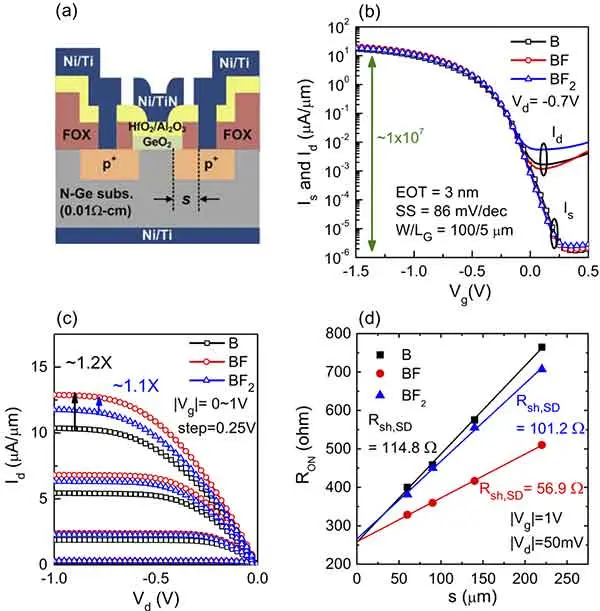
These materials are widely used in:
- High-speed transistors
- RF electronics
- Optoelectronics
- Infrared detectors
- Semiconductor lasers
- LED devices
- Solar cells
- Quantum dot structures
- Terahertz emitters
Compared to conventional silicon substrates, many III-V compounds offer:
- Higher electron mobility
- Direct bandgap properties
- Superior optical performance
- High-frequency operation
- Enhanced infrared sensitivity
Because of these properties, III-V materials are critical for modern photonics and high-performance semiconductor devices.
Common III-V Semiconductor Materials
Gallium Arsenide (GaAs)
GaAs wafers are commonly used for RF electronics, high-speed devices, LEDs, solar cells, and optoelectronic systems because of their high electron mobility and direct bandgap.
Gallium Antimonide (GaSb)
GaSb substrates are frequently used for infrared detectors, thermophotovoltaic systems, and mid-infrared optoelectronics.
Indium Phosphide (InP)
InP wafers are widely used for high-frequency electronics, photonic integrated circuits, optical communications, and InGaAs epitaxial structures.
Indium Arsenide (InAs)
InAs wafers are used in infrared sensing, quantum dot research, terahertz emitters, and high-mobility semiconductor devices.
III-V Carrier Concentration and Mobility
Carrier concentration and electron mobility are critical properties in III-V semiconductor device design. High carrier mobility allows faster switching speeds and improved high-frequency performance in FETs, RF amplifiers, and photonic devices.
Depending on the application, researchers may request:
- Undoped III-V substrates
- N-type doped wafers
- P-type doped wafers
- Semi-insulating substrates
- High mobility materials
- Low defect density epitaxial wafers
Optimizing carrier concentration often requires balancing:
- Switching speed
- Electron mobility
- Power handling capability
- Thermal stability
- Device leakage behavior
Many high-speed III-V devices favor lower carrier concentrations to maximize mobility, while higher dopant levels are often preferred for power electronics and high-current applications.
Custom III-V Semiconductor Wafers
UniversityWafer supplies custom III-V substrates with specific doping levels, orientations, thicknesses, resistivity ranges, epitaxial structures, and thin film deposition options for university research labs and semiconductor production environments.
Need Custom III-V Semiconductor Wafers? UniversityWafer can supply GaAs, GaSb, GaP, InP, InAs, InSb, and related III-V compound semiconductor substrates optimized for photonics, RF electronics, FET devices, and advanced materials research.
Get Your III-V Wafer Quote FAST! Or, Buy Online and Start Researching Today!