
Research request: 200µm silicon wafers for mid-infrared transmission research, preferably polished on both sides, with no dopants, and suitable for silicon filter fabrication. Off-the-shelf wafers were preferred for initial testing.
Silicon Wafers for Infrared Filter Research
A Ph.D. researcher requested thin silicon wafers for fabricating a silicon infrared filter with mid-infrared transmission down to approximately 11µm. For this type of optical filter research, researchers often need undoped silicon wafers, high-resistivity material, and a double-side polished surface to reduce scattering and improve optical transmission.
UniversityWafer, Inc. quoted:
Si Item #E0128
50.8mm Undoped [100] 250µm DSP FZ >20,000 Ω-cm, SEMI Prime, 1 flat, MCC lifetime >1,000µs.
Reference #270676 for pricing.
Get Your Silicon Filter Wafer Quote FAST! Or, Buy Online and start researching today.
Silicon Infrared Transmission Range
Silicon infrared transmission depends on wafer thickness, dopant level, resistivity, surface polish, and wavelength range. Thin, undoped, high-resistivity silicon wafers are often selected for mid-infrared filter research because they can provide better optical performance than heavily doped or rough-surface wafers.
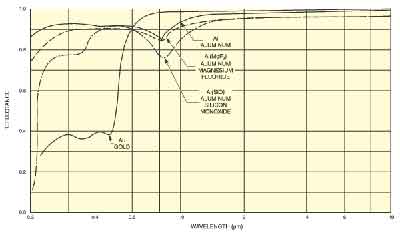
For infrared and optical applications, researchers may compare silicon with other materials such as InGaAs detector wafers, germanium, sapphire, quartz, silicon nitride, and optical glass. Silicon is especially useful when the device requires semiconductor compatibility, mechanical strength, and mid-infrared optical behavior.
Silicon Filter and Optical Wafer Keywords
- Silicon infrared filter wafers
- Mid-infrared silicon transmission
- Undoped silicon wafers
- High-resistivity silicon wafers
- Double-side polished silicon wafers
- Thin silicon wafers
- Optical filter substrates
- Silicon photodiodes
- Wavelength filters
- Broadband optical filters
- Silicon membranes
- Spectral responsivity
What Is a Silicon Filter?
Silicon filters are optical, infrared, or membrane-based filter structures made from silicon wafers, silicon films, or silicon-based membranes. Silicon is useful for filter research because it offers strong mechanical stability, good thermal resistance, chemical durability, and useful optical transmission properties in selected infrared wavelength ranges.
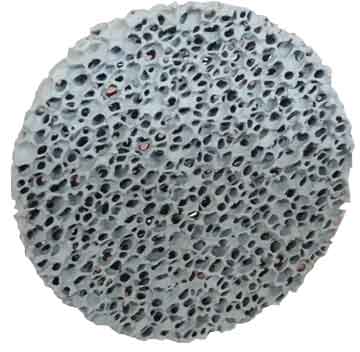 Researchers use silicon filters in infrared optics, mid-infrared transmission studies, photodiodes, wavelength filtering, nanoporous membranes, photonic devices, gas sensing, and semiconductor device fabrication. The best wafer depends on the required transmission range, thickness, dopant level, surface polish, resistivity, and whether the application needs a bulk silicon filter, thin silicon membrane, or coated optical filter.
Infrared Silicon Filters
An infrared silicon filter is designed to transmit, block, or modify specific infrared wavelengths. Silicon wafers are often considered for mid-infrared optical research because wafer thickness, dopant concentration, surface polish, and crystal quality can strongly affect transmission. For optical filtering, researchers often request undoped silicon wafers, high-resistivity silicon wafers, and double-side polished silicon wafers.
Infrared filters can also be fabricated by depositing thin films onto silicon or other optical substrates. Vacuum deposition, sputtering, and other thin-film processes can be used to build multilayer filter structures with controlled passbands, blocking ranges, and optical response.
Silicon Wafers for Mid-Infrared Transmission
Silicon wafer filters used for mid-infrared transmission are often thin, polished on both sides, and lightly doped or undoped. A thinner wafer can improve transmission in some wavelength ranges, while DSP polish helps reduce scattering from rough surfaces. Researchers may request wafers around 200µm to 250µm thick for silicon infrared filter studies.
Common silicon filter wafer specifications include:
- Undoped or high-resistivity silicon
- Float zone silicon for higher purity
- Double-side polished surface finish
- Thin wafers, such as 200µm, 250µm, or custom thickness
- Specific crystal orientation, such as <100>
- Low dopant concentration for optical transmission research
Nanoporous Silicon Membranes and Filtration
Nanoporous silicon membranes are silicon-based filters that contain controlled pores for separating molecules, particles, or biological materials. These membranes can be used in single-molecule analysis, DNA studies, biomolecule translocation, microfluidics, and lab-on-a-chip research.
Silicon membranes may also be fabricated with silicon nitride, thermal oxide, or other thin films depending on the pore size, membrane strength, chemical resistance, and device design. Photolithography, reactive ion etching, ion track etching, and thin-film deposition are common processing methods for silicon-based membranes.
Thermal and Chemical Stability of Silicon Filters
Silicon filters are valued in research because silicon is dimensionally stable, mechanically strong, and compatible with many semiconductor processing methods. Silicon substrates can also support thin-film coatings, photonic structures, membranes, and patterned filter devices.
For harsh environments, researchers may compare silicon with materials such as silicon carbide, quartz, sapphire, germanium, or glass depending on the required optical, thermal, and chemical performance.
Applications for Silicon Filter Wafers
Silicon wafers and silicon membranes are used in many filter-related applications across optics, photonics, electronics, and materials research.
- Infrared silicon filters and mid-IR transmission studies
- Optical filters and wavelength-selective devices
- Silicon photodiodes and detector research
- Nanoporous silicon membranes
- Gas sensing and spectral filtering
- Microfluidic filtration and lab-on-a-chip devices
- Photonic devices and silicon-based optical structures
- Thin-film coated silicon filter substrates
Silicon Filter Substrates for Research
UniversityWafer, Inc. supplies silicon wafers for infrared filters, optical filters, silicon membranes, photodiodes, photonics, and semiconductor device research. Researchers can request wafers by diameter, thickness, orientation, dopant type, resistivity, polish, oxide layer, and custom specifications.