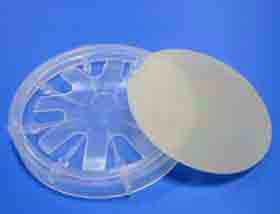
Best Silicon Wafers Revealed
Silicon wafers are the foundation of modern nanotechnology. These thin, circular discs of pure crystalline silicon are used to create incredibly small and complex devices. In nanofabrication, choosing the right silicon wafer is very important. The quality, purity, and properties of the wafer directly affect how well the final nanodevices work. This makes it crucial to pick the most suitable wafer for each project.
| Key Takeaways |
- Float Zone (FZ) silicon wafers are the purest for advanced nanofabrication
- Czochralski (CZ) wafers balance quality and cost
- Wafer size choice depends on project scale and equipment
- Surface quality, crystal orientation, and doping are important factors
- Advanced processing can enhance wafer properties for specific uses
|
Let's explore silicon wafers and find out which ones are best for nanofabrication. We'll look at different types, sizes, and properties to help you choose the right one for your project. Understanding these things will help you improve your nanofabrication processes and get better results in your research or production work.
Understanding Silicon Wafer Basics
Before we get into specifics, it's important to know what makes a silicon wafer good for nanofabrication. The key things to think about are:
- Purity of the silicon: Purer silicon works better electrically and has fewer defects
- Crystal structure: This affects how the atoms are arranged, which impacts device performance
- Surface quality: This affects how uniform and reliable the fabricated nanostructures are
- Wafer size: This affects production efficiency and what equipment you can use
- Thickness: This affects how stable the wafer is mechanically and how it handles heat
- Electrical properties: These are crucial for how electronic components behave
These factors directly impact how well the wafer will work in various nanofabrication processes. Advanced semiconductor technology needs wafers that are extremely pure and precisely made. How these characteristics work together determines if a wafer is suitable for specific uses, from making quantum dots to creating complex integrated circuits.
Float Zone Silicon Wafers: The Best Quality
When it comes to the best silicon wafers for nanofabrication, Float Zone (FZ) silicon wafers are often considered the top choice. These wafers are known for being extremely pure and having perfect crystals, making them ideal for cutting-edge research and making high-performance devices.
Key advantages of Float Zone silicon wafers include:
- Ultra-high purity (99.999999999% pure silicon): This means there are very few impurities that could interfere with how devices work
- Very low oxygen content: This reduces unwanted oxidation effects during high-temperature processes
- Excellent electrical properties: This allows for the creation of highly sensitive and efficient electronic devices
- Ideal for high-performance devices: Perfect for applications that need extreme precision and reliability
These wafers are great for creating sensitive sensors, high-power devices, and advanced research applications. However, they can be more expensive than other types of silicon wafers. The Float Zone process, which involves melting a narrow zone of a silicon ingot using radio frequency heating, results in a nearly perfect crystal structure. This makes FZ wafers particularly good for applications in solar cells, power electronics, and quantum computing research.
Czochralski Silicon Wafers: The Versatile Choice
Czochralski (CZ) silicon wafers are another popular option for nanofabrication. While not as pure as Float Zone wafers, they offer a good balance of quality and cost-effectiveness, making them suitable for many applications in both research and industry.
CZ wafers are widely used in the semiconductor industry and work well for many nanofabrication applications. They have a bit more oxygen than FZ wafers, which can be helpful in some cases by making the wafer stronger and helping to trap impurities. The Czochralski process involves pulling a single crystal from melted silicon, resulting in wafers with good uniformity and consistent properties across large diameters.
The versatility of CZ wafers makes them ideal for applications such as:
- Making integrated circuits
- MEMS (Micro-Electro-Mechanical Systems) devices
- Solar cell production
- Various nanoelectronic research projects
While CZ wafers may not be as pure as FZ wafers, their lower cost and availability in larger sizes make them the go-to choice for many nanofabrication processes.
Choosing the Right Wafer Size
Silicon wafers come in different sizes, with the most common being 100mm (4 inches), 150mm (6 inches), 200mm (8 inches), and 300mm (12 inches) in diameter. The size you choose depends on what you need and what equipment you're using. Each size has different advantages in terms of cost, how many devices you can make, and what fabrication tools you can use.
For many research and small-scale nanofabrication projects, 100mm wafers are a popular choice. They're easier to handle and more cost-effective for smaller production runs. These wafers are ideal for academic research, prototyping, and specialized applications where you don't need to make a lot of devices.
On the other hand, 300mm wafers are typically used in high-volume manufacturing and advanced research facilities. They offer significant advantages in terms of production efficiency and cost per device, but require more sophisticated and expensive processing equipment.
4-inch silicon wafers (100mm) are particularly versatile and widely used in nanofabrication. They offer a good balance between cost and usability for many applications. These wafers work with a wide range of equipment and are often used in:
- University research labs
- Small-scale device production
- Prototyping new nanodevices
- Specialized sensor fabrication
When selecting a wafer size, consider factors such as:
- How big your production or research project is
- If the wafer works with your existing fabrication equipment
- Cost per device or experiment
- How complex and big the devices you're creating are
Surface Quality and Orientation
The surface quality of a silicon wafer is crucial for successful nanofabrication. It directly impacts how uniform and reliable the nanostructures you create will be. Wafers are typically available with different surface finishes:
- Prime grade: Highest quality, suitable for most nanofabrication processes. These wafers have very few defects and are extremely flat, making them ideal for critical applications.
- Test grade: Good for process development and non-critical applications. While not as perfect as prime grade, they offer a cost-effective option for many research and development projects.
- Reclaimed: Recycled wafers, suitable for some applications but may have limitations. These can be a sustainable choice for certain non-critical processes or educational purposes.
Crystal orientation is another important factor that affects how the wafer interacts with various fabrication processes. The most common orientations are:
- <100>: Most widely used, suitable for many applications. This orientation is preferred for CMOS (Complementary Metal-Oxide-Semiconductor) technology due to its favorable electronic properties.
- <111>: Used in some specific applications, particularly where certain etching characteristics are desired. This orientation can be useful in MEMS devices and some specialized sensors.
- <110>: Less common, but useful for certain devices. It has unique properties that make it suitable for specific types of sensors and some optoelectronic applications.
The choice of orientation depends on the specific requirements of your nanofabrication process and the devices you're creating. Different orientations can affect:
- How fast and in what shape etching occurs
- Electrical characteristics of fabricated devices
- Mechanical properties of the final structures
- Crystal plane-dependent phenomena in certain nanodevices
Doping and Resistivity
Silicon wafers can be doped with various elements to change their electrical properties, which is crucial for making semiconductor devices. The two main types of doping are:
- N-type: Typically doped with phosphorus, introducing extra electrons as charge carriers
- P-type: Usually doped with boron, creating "holes" or positive charge carriers
The level of doping affects the wafer's resistivity, which is measured in ohm-cm. For nanofabrication, you might need wafers with specific resistivity ranges depending on your application. The resistivity of silicon wafers can range from:
- 0.001 - 0.005 ohm-cm (heavily doped)
- 1 - 10 ohm-cm (moderately doped)
- >1000 ohm-cm (lightly doped or intrinsic)
Choosing the right doping level and resistivity is crucial for:
- Controlling the electrical behavior of your devices
- Optimizing performance for specific applications (e.g., high-speed vs. high-power devices)
- Ensuring compatibility with your fabrication processes
- Meeting the requirements of particular nanodevice designs
Advanced Processing Techniques
To get the most out of your silicon wafers in nanofabrication, various advanced processing techniques can be applied. These techniques can enhance the wafer's properties and make it more suitable for specific nanofabrication needs. Some key advanced processes include:
- Silicon wafer backgrinding: Thinning the wafer for specific applications. This process makes the wafer thinner, which is important for applications that need very thin substrates, like flexible electronics or 3D integrated circuits.
- Double-side polishing: For applications requiring both sides to be smooth. This technique is essential for devices that use both surfaces of the wafer, such as certain types of MEMS devices or double-sided solar cells.
- Epitaxial layer growth: Adding a thin, high-quality silicon layer on top of the wafer. Epitaxial layers offer precise control over doping profiles and can provide a defect-free surface for device fabrication, crucial for high-performance integrated circuits and advanced sensors.
Other advanced techniques that can enhance wafer properties include:
- Ion implantation: For precise control of doping profiles
- Thermal oxidation: Creating high-quality silicon dioxide layers
- Chemical-mechanical planarization (CMP): Achieving extremely flat and smooth surfaces
- Gettering: Removing impurities from active device regions
These advanced processing techniques allow for greater customization of wafer properties, enabling the creation of more complex and high-performance nanodevices. They play a crucial role in pushing the boundaries of what's possible in nanofabrication and semiconductor technology.
Choosing the Right Wafer for Your Project
Selecting the best silicon wafer for your nanofabrication project depends on several factors, each of which can significantly impact the success of your work:
- The specific devices or structures you're creating: Different nanodevices may require particular wafer properties to function optimally.
- The fabrication processes you'll be using: Some processes may work better with certain wafer types or surface finishes.
- Your budget and production volume: Consider the cost-effectiveness of different wafer options, especially for large-scale production.
- The equipment and facilities available to you: Make sure your chosen wafers work with your fabrication tools.
Additional considerations when choosing wafers include:
- The required level of purity for your application
- Specific electrical or optical properties needed for your devices
- Any special requirements for surface roughness or flatness
- The need for customized or pre-processed wafers
It's often helpful to ask experts or wafer suppliers to determine the most suitable wafer specifications for your needs. Specialized wafer services can provide guidance and custom solutions for your nanofabrication projects. These services can offer valuable insights into:
- The best wafer specifications for your specific application
- Cost-effective solutions that don't compromise quality
- Advanced processing options to enhance wafer properties
- New trends and technologies in silicon wafer manufacturing
Alternative Materials: Beyond Silicon
While silicon is the most common material for nanofabrication, other materials are sometimes used for specific applications that require unique properties or performance characteristics. For example, sapphire wafers are used in certain optoelectronic devices and LED manufacturing because they have excellent optical properties and can withstand high temperatures.
Other alternative materials used in specialized nanofabrication include:
- Gallium Arsenide (GaAs): Used in high-frequency and optoelectronic devices
- Silicon Carbide (SiC): Ideal for high-power and high-temperature applications
- Indium Phosphide (InP): Crucial for certain types of lasers and high-speed electronics
- Germanium (Ge): Used in some infrared detectors and high-efficiency solar cells
These alternative materials can offer unique properties that make them suitable for specialized nanofabrication processes. However, silicon remains the go-to choice for most applications because its manufacturing processes are well-established and it has versatile properties. The vast infrastructure and knowledge base surrounding silicon technology make it the most cost-effective and reliable option for a wide range of nanofabrication projects.
Conclusion: Empowering Your Nanofabrication Journey
Choosing the best silicon wafers for nanofabrication is a crucial step in ensuring the success of your projects. By understanding the different types of wafers, their properties, and how they relate to various nanofabrication processes, you can make informed decisions that will lead to better results. The right choice of wafer can significantly impact the performance, reliability, and cost-effectiveness of your nanodevices.
Remember that the "best" wafer depends on your specific needs. Whether you choose ultra-pure Float Zone wafers, versatile Czochralski wafers, or specialized alternatives, the key is to match the wafer properties to your application requirements. Consider factors such as:
- The level of purity and crystal perfection required
- The specific electrical and mechanical properties needed
- Compatibility with your fabrication processes and equipment
- The scale and budget of your project
As nanofabrication techniques continue to advance, staying informed about the latest developments in silicon wafer technology will help you stay at the forefront of this exciting field. Keep an eye on emerging trends such as:
- Ultra-thin wafers for flexible electronics
- Advanced doping techniques for improved device performance
- Novel surface treatments for enhanced nanofabrication capabilities
- Integration of alternative materials with silicon for hybrid devices
With the right wafers and knowledge, you're well-equipped to push the boundaries of what's possible in the nano-world. The field of nanofabrication continues to evolve, offering exciting opportunities for innovation and discovery across various industries and scientific disciplines.
Ready to start your next nanofabrication project? Explore our range of high-quality silicon wafers and find the perfect match for your innovative ideas! Whether you're working on cutting-edge research, developing new nanodevices, or pushing the limits of semiconductor technology, choosing the right silicon wafer is your first step towards success in the fascinating world of nanofabrication.