Fabricating MEMS Based Energy Harvesting Device
A PhD candidate requested a quote for the following:
I am research student at Indian Institute of technology. Currently i
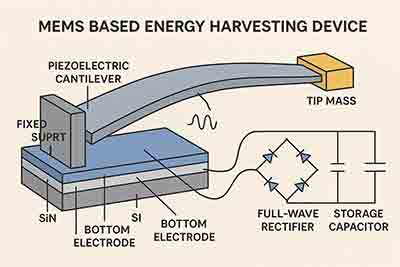
am working on MEMS based Energy Harvesting Device which will be made
from piezo materials (ZnO or PZT). So please suggest any wafer of
2inch in your stock so that i can order it.
I want 2 inched silicon wafer with different thickness and material deposited in following sequence.
- 2" Silicon wafer p type or n type
- Growing of SiO2 on wafer upto
500 nanometer.
- Deposition of Titanium upto
500 nanometer above Sio2.
- Deposition of PZT or ZnO upto
2 micrometer above Titanium.
- Deposition of Titanium upto
500 nanometer above PZT.
So kindly tell me cost it will
required for this composite.
Reference #120417 for specs and pricing.
Get Your FAST! Or, Buy Online and Start Researching Today!
What Is An Energy Harvesting Device?
An Energy Harvesting Device is a technology designed to capture and store energy from various sources in the environment. These devices convert ambient energy into electrical power that can be used to operate small electronic devices or sensors. The energy sources can include:
- Solar Energy: Captured through photovoltaic cells that convert sunlight into electricity.
- Thermal Energy: Collected from heat sources such as body heat or industrial processes, often using thermoelectric generators.
- Mechanical Energy: Harvested from vibrations, pressure, or motion, typically using piezoelectric materials or electromagnetic generators.
- Electromagnetic Energy: Captured from ambient radio frequencies or magnetic fields.
Energy harvesting devices are particularly useful in applications where replacing or recharging batteries is impractical, such as in remote sensors, wearable technology, and the Internet of Things (IoT) devices. By utilizing ambient energy, these devices can operate autonomously and sustainably, reducing the need for conventional power sources.
What Substrates Are Used To Fabricate Energy Harvesting Devices?
Various substrates are used to fabricate energy harvesting devices, depending on the type of energy being harvested and the specific application. Here are some common substrates:
-
Silicon: Widely used in photovoltaic cells for solar energy harvesting. Silicon substrates provide a stable and efficient platform for converting sunlight into electricity.
-
Piezoelectric Materials: Substrates like lead zirconate titanate (PZT) and polyvinylidene fluoride (PVDF) are used in devices that harvest mechanical energy. These materials generate electric charges in 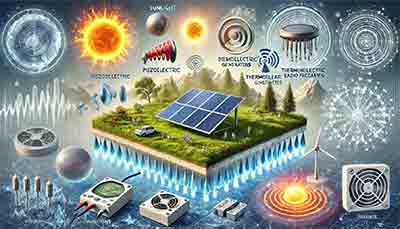 response to mechanical stress.
-
Thermoelectric Materials: Substrates such as bismuth telluride (Bi2Te3) and Silicon-Germanium (SiGe) alloys are used in thermoelectric generators that convert thermal energy into electrical energy.
-
Organic Materials: Flexible and lightweight organic substrates, like polymers and organic semiconductors, are used in organic photovoltaic cells (OPVs) and other flexible energy harvesting devices.
-
Metal Oxides: Substrates like Zinc Oxide (ZnO) and titanium dioxide (TiO2) are used in various energy harvesting applications, including piezoelectric and photovoltaic devices.
-
Nanomaterials: Substrates composed of nanomaterials, such as carbon nanotubes and graphene, are explored for their unique electrical and mechanical properties, which can enhance the efficiency of energy harvesting devices.
-
Glass: Often used in combination with other materials for solar cells and photovoltaic applications due to its transparency and stability.
Each substrate has specific properties that make it suitable for different types of energy harvesting applications, balancing factors such as efficiency, cost, flexibility, and durability.
