Graphene on PET Samples for Research & Production
Graphene on PET substrates combine excellent electrical conductivity, optical transparency, and mechanical flexibility, making them ideal for flexible electronics, transparent conductive films, optoelectronics, infrared devices, sensors, and advanced semiconductor research.
Graphene on PET Sheet Resistance for Flexible Electronics
Graphene on PET substrates are widely used in flexible electronics, transparent conductive films, infrared devices, sensors, photonics research, and optoelectronic applications because they combine electrical conductivity with optical transparency and mechanical flexibility.
Researchers often request graphene on PET samples with specific sheet resistance, substrate size, optical transmission, and conductivity characteristics depending on the intended device application.
A researcher asked:
Can you provide the sheet resistance of graphene on PET samples, especially for large-area substrates?
2 questions:
a) Is 1 cm × 1 cm the largest available size? Can you provide 5 cm × 5 cm samples?
b) Is it possible to achieve lower sheet resistance values around 100 Ohm/sq maximum?
UniversityWafer, Inc. replied:
The typical sheet resistance for monolayer graphene on PET substrates is approximately 580 ± 50 Ohms/sq for 1 cm × 1 cm samples.
Custom graphene on PET substrate sizes are available, including larger flexible substrates such as:
- 5 cm × 5 cm graphene on PET
- Custom flexible substrate dimensions
- Monolayer graphene films
- Transparent conductive graphene coatings
Example configuration:
- Monolayer Graphene on PET
- G/PET/Custom/M-25
- 5 cm × 5 cm flexible graphene substrate
Researchers developing flexible electronic devices may request graphene films with lower sheet resistance values depending on graphene quality, growth method, transfer process, layer thickness, and substrate configuration.
Graphene on PET is commonly studied for:
- Flexible touch displays
- Transparent conductive electrodes
- Wearable electronics
- Infrared imaging devices
- Optoelectronic sensors
- Flexible photovoltaic devices
- Thin film semiconductor research
Scientists may also combine graphene with CVD processing, thin films, and photonic devices for advanced semiconductor and optoelectronic applications.
Get Your Quote FAST! Or,
Buy Online
and Start Researching Today!
Common graphene on PET research requests include:
- Low sheet resistance graphene films
- Large-area flexible graphene substrates
- Transparent conductive coatings
- Flexible semiconductor devices
- Monolayer graphene samples
- Custom graphene substrate sizes
What Makes Graphene on PET Useful?
Graphene on PET is a flexible, transparent conductive material used in advanced research involving flexible electronics, sensors, transparent conductive films, optoelectronics, touch displays, solar cells, and infrared devices. PET provides a lightweight flexible polymer substrate, while graphene adds electrical conductivity, optical transparency, and mechanical strength.
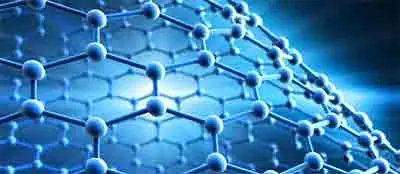
Graphene is a single layer of carbon atoms arranged in a two-dimensional honeycomb structure. Because it is extremely thin, conductive, transparent, and flexible, graphene is often studied as an alternative to traditional transparent conductive materials such as ITO glass wafers.
Graphene on PET Sheet Resistance
Sheet resistance is one of the most important specifications for graphene on PET samples. It describes how easily electrical current moves across the surface of the graphene film. Lower sheet resistance is usually preferred for transparent conductive films, flexible circuits, sensors, and optoelectronic devices.
Graphene on PET samples are commonly used when researchers need a flexible conductive surface for testing electrical performance, transparency, bending durability, and device integration.
Applications of Graphene on PET
Graphene on PET substrates are used in many research and development applications because they combine conductivity with flexibility. Common applications include:
- Flexible electronics
- Transparent conductive films
- Touch sensor research
- Photodetectors
- Solar cell electrodes
- Infrared imaging devices
- Wearable electronics
- Optoelectronic devices
- Thin film research
Researchers may also use graphene substrates, silicon wafers, and thin film materials for related semiconductor and optoelectronic experiments.
Why Researchers Use Graphene for Transparent Conductive Films
Graphene is attractive for transparent conductive film research because it offers a unique combination of high carrier mobility, optical transparency, flexibility, and chemical stability. These properties make it useful for devices that require both light transmission and electrical conductivity.
Compared with rigid conductive coatings, graphene on PET can support bendable and lightweight device designs. This makes it useful for next-generation flexible displays, wearable sensors, transparent electrodes, and advanced photonic devices.
Graphene on PET for Optoelectronics and Sensors
Graphene on PET is often studied in optoelectronic and sensor applications because it can respond to electrical, optical, and mechanical changes. Its flexible substrate allows researchers to test devices under bending, stretching, and repeated handling conditions.
Graphene-based materials may be used in:
- Flexible photodetectors
- Transparent electrodes
- Conductive polymer research
- Biomedical sensors
- Photonic device testing
- Semiconductor material studies
Graphene can also be combined with CVD, silicon, thin films, and photonic structures for advanced materials research.
