
Get Your Solar Wafer Quote FAST!
Need silicon wafers for solar cell research? UniversityWafer supplies silicon substrates used in photovoltaic research, solar cell development, thin-film coatings, doped junction studies, and renewable energy experiments.
Request Your Quote Today! Or, Buy Online and Start Researching Today!
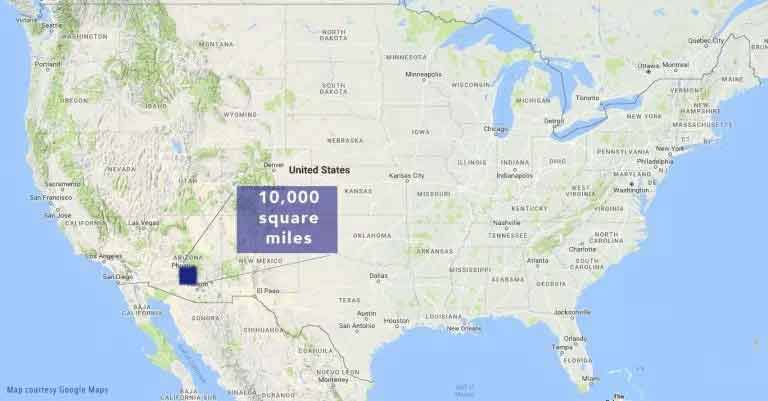
What Does 10,000 Square Miles of Solar Panels Look Like?
One simplified estimate suggests that about 10,000 square miles of solar panels could generate enough electricity to power the United States. The image below helps visualize how much land area that represents compared with the size of the country.
Silicon Wafers for Photovoltaic Research
Silicon wafers are the foundation of most photovoltaic solar cells. Researchers use high-quality substrates to study solar cell efficiency, surface passivation, anti-reflective coatings, dopant diffusion, thin-film deposition, and next-generation renewable energy devices.
- Solar-grade and research-grade silicon wafers
- P-type and N-type silicon substrates
- Custom resistivity, thickness, and orientation
- Prime, test, and reclaimed wafers
- Small research quantities and larger production lots
How Many Solar Panels Would It Take to Power the World?
Solar panels made from silicon photovoltaic cells are one of the most scalable ways to generate clean electricity. A simplified estimate often used in solar energy discussions suggests that a land area roughly the size of Germany could generate enough electricity to power the world, depending on solar panel efficiency, sunlight availability, spacing, storage, and grid infrastructure.
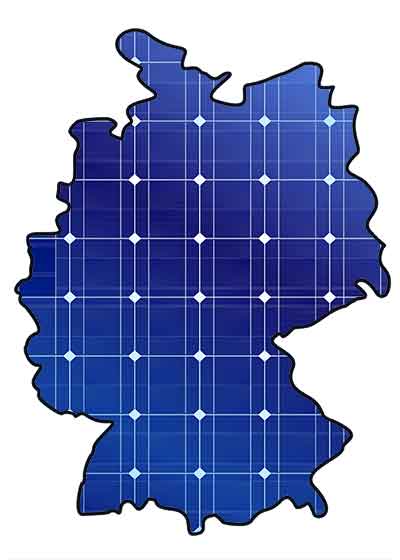 The actual number of solar panels needed depends on many factors, including panel wattage, photovoltaic efficiency, geographic location, weather, energy demand, and how much battery storage is available. Higher-efficiency silicon solar cells reduce the total land area required, while battery systems help store daytime solar power for nighttime and cloudy conditions.
How Much Land Would Solar Power Require?
One frequently cited estimate suggests that approximately 10,000 square miles of solar panels could generate enough electricity to power the United States. While this number is simplified, it helps show the enormous potential of solar energy when paired with modern silicon solar cells, battery storage, and high-voltage transmission systems.
Large-scale solar installations do not need to replace farmland or forests. Solar panels can be installed on many underused or already-developed areas, including:
- Commercial and residential rooftops
- Parking lots and solar carports
- Landfills and brownfield sites
- Former industrial or polluted land
- Desert regions with strong sunlight
- Former mining or energy production sites
Why Silicon Solar Cells Matter
Most solar panels are manufactured using silicon solar cells. Silicon is abundant, reliable, and widely used in photovoltaic manufacturing because it can efficiently convert sunlight into electricity. Improvements in silicon wafer quality, cell design, passivation layers, and module architecture continue to increase solar panel efficiency and reduce the cost of solar electricity.
Silicon wafers are the foundation of many photovoltaic devices. Researchers use high-quality silicon wafers to study solar cell structures, anti-reflective coatings, doped junctions, thin-film layers, and next-generation photovoltaic technologies.
Solar Power, Storage, and the Future Grid
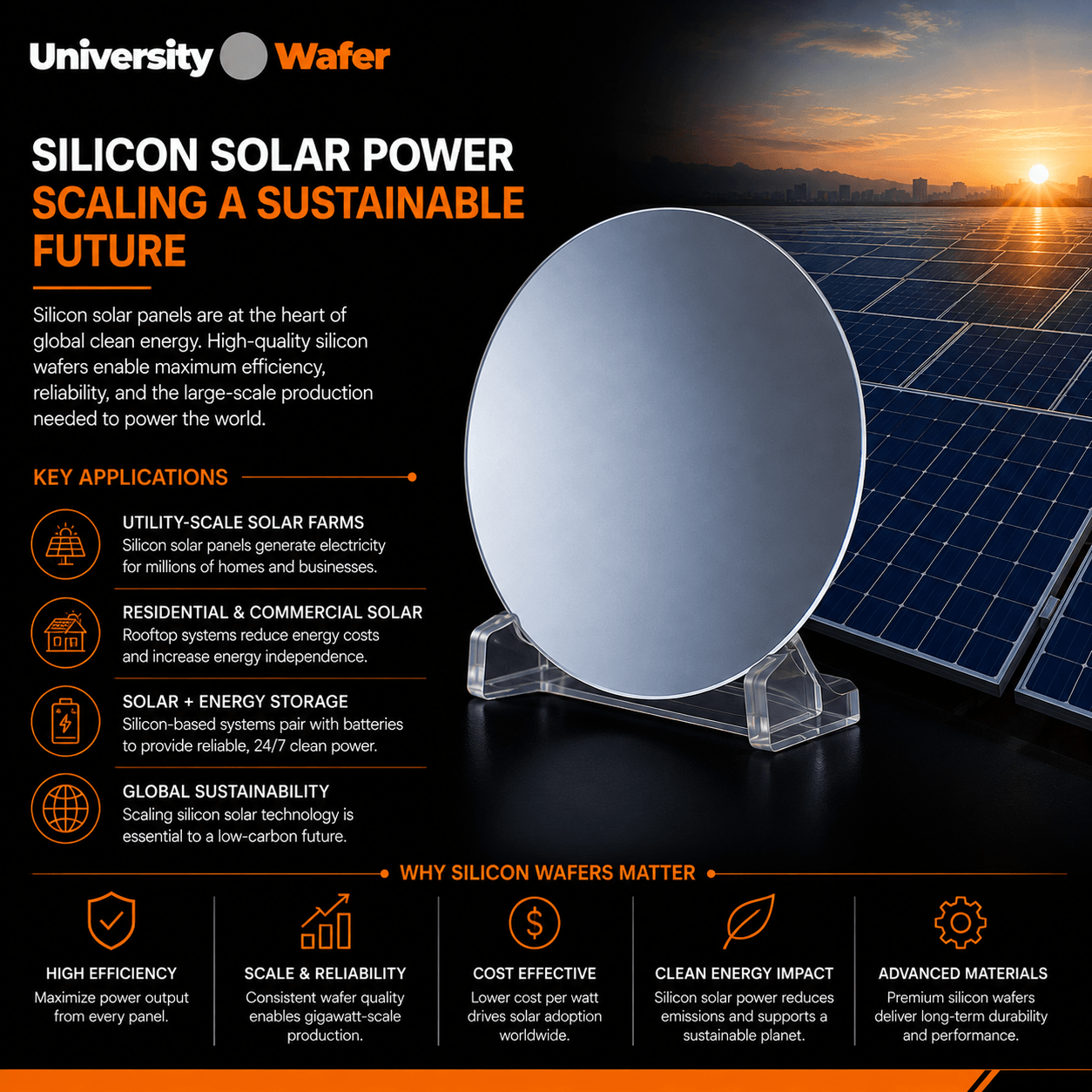
Solar energy becomes even more powerful when combined with battery storage and a modern electrical grid. Batteries can store excess solar power produced during the day and release it at night or during cloudy weather. As battery production increases and costs decline, solar-plus-storage systems are becoming more practical for homes, businesses, utilities, and microgrids.
In the future, rooftops, commercial buildings, parking structures, and utility-scale solar farms may work together as part of a cleaner and more distributed energy system. With continued advances in silicon photovoltaic technology, solar panels can play a major role in reducing fossil fuel use and supporting global electricity demand.