
Glass Wafers for Optical Darkfield Imaging Research
Researchers using glass wafers for optical darkfield imaging, microscopy, nanoparticle detection, and surface inspection often require ultra-flat optical substrates with high transparency, low surface roughness, and excellent light transmission properties.
Optical darkfield imaging systems commonly use:
- Borosilicate glass wafers
- BK7 optical glass substrates
- Fused silica wafers
- Quartz optical substrates
- Sapphire optical wafers
- Low-autofluorescence glass materials
Scientists and engineers performing darkfield microscopy may request custom optical substrates with specific:
- Wafer diameters
- Thickness tolerances
- Surface flatness
- Optical transmission ranges
- Double-side polished surfaces
- Low-defect optical finishes
Darkfield imaging substrates are widely used in:
- Nanoparticle analysis
- Semiconductor wafer inspection
- Biomedical microscopy
- Thin film characterization
- MEMS device inspection
- Optical surface analysis
Researchers may also use fused silica wafers, single crystal quartz, and sapphire substrates for advanced optical microscopy and high-precision imaging applications.
Get Your Quote FAST! Or, Buy Online and Start Researching Today!
Common darkfield imaging substrate requests include:
- Ultra-flat glass wafers
- Double-side polished optical substrates
- Low surface roughness glass
- UV-transparent optical wafers
- High-transmission microscopy substrates
What is Optical Darkfield Imaging?
Optical darkfield imaging is a microscopy and imaging technique that improves contrast by blocking direct transmitted light and collecting only scattered or reflected light from the sample. This makes small particles, surface defects, edges, scratches, and transparent structures appear bright against a dark background.
Darkfield microscopy is widely used in scientific imaging, biological research, nanoparticle detection, semiconductor inspection, materials science, and optical surface analysis. Because the technique depends heavily on light scattering, the quality of the glass wafer or optical substrate can directly affect image clarity and measurement accuracy.
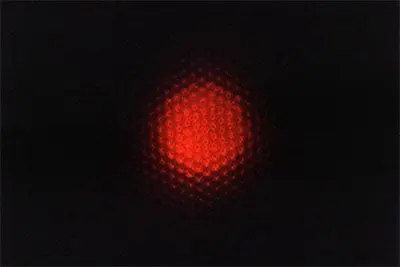
Why Glass Wafers Are Used in Darkfield Imaging
High-quality glass wafers are commonly used in optical darkfield imaging because they provide excellent transparency, smooth surfaces, and stable optical performance. A clean, flat substrate helps reduce unwanted scattering and improves the visibility of fine sample features.
Researchers may choose glass, fused silica, quartz, sapphire, or borosilicate substrates depending on wavelength range, thermal stability, surface flatness, and optical transmission requirements.
Glass wafers used for darkfield imaging are often selected for:
- High optical clarity
- Low surface roughness
- Good dimensional stability
- Low autofluorescence
- Cleanroom compatibility
- Consistent light transmission
- Reduced background scattering
Darkfield Imaging for Surface Inspection
Darkfield imaging is especially useful for detecting surface contamination, scratches, microcracks, nanoparticles, and defects that may be difficult to see with standard brightfield microscopy. When light strikes small particles or surface irregularities, it scatters into the imaging optics and appears bright against the dark background.
This makes optical darkfield imaging useful for inspecting silicon wafers, optical windows, glass substrates, thin films, MEMS devices, and semiconductor materials. The method is often used when researchers need high-contrast visualization without staining or destructive sample preparation.
Optical Substrates for Darkfield Microscopy
The best substrate for darkfield microscopy depends on the experiment. For visible-light imaging, borosilicate glass and soda lime glass may be suitable. For UV, near-infrared, or high-precision optical work, researchers often choose fused silica wafers, quartz wafers, or sapphire substrates.
Common optical substrate options include:
- BK7 glass wafers
- Borofloat 33 glass wafers
- Fused silica wafers
- Single crystal quartz wafers
- Sapphire wafers
- Soda lime glass wafers
Applications of Optical Darkfield Imaging
Optical darkfield imaging is used across research labs and manufacturing environments where high-contrast visualization of small features is required.
- Nanoparticle detection
- Semiconductor wafer inspection
- Surface defect analysis
- Thin film inspection
- Biomedical microscopy
- Optical coating evaluation
- MEMS and microfluidic device inspection
- Materials science research
For darkfield imaging applications, choosing the correct glass wafer or optical substrate helps improve contrast, reduce background noise, and support more reliable microscopy results.