
Why Silicon Wafer Notches Matter
Silicon wafer notches play a critical role in modern semiconductor manufacturing by providing a consistent reference point for wafer alignment. During photolithography, etching, thin film deposition, ion implantation, and wafer inspection, equipment uses the notch location to ensure that each wafer is processed in the correct orientation.
As the semiconductor industry transitioned to larger wafer diameters, notches became the preferred orientation method because they occupy less edge space than traditional flats and are easier for automated wafer handling systems to detect. Today, most 150mm, 200mm, and 300mm silicon wafers supplied to semiconductor fabs use orientation notches.
Researchers commonly specify notched wafers when ordering prime-grade silicon wafers, thermal oxide wafers, SOI wafers, and epitaxial silicon wafers. Proper wafer orientation is particularly important for MEMS fabrication, integrated circuits, power devices, photonics, and advanced semiconductor process development.
UniversityWafer supplies notched silicon wafers in a wide range of diameters, crystal orientations, dopant types, resistivities, and surface finishes. Whether you need a small quantity for university research or production quantities for semiconductor manufacturing, our team can help identify the correct wafer specifications for your application.
Get Your Silicon Wafer Quote FAST! Complete the form below or Buy Online and Start Researching Today!
Silicon Wafer Notches for Semiconductor Manufacturing
A silicon wafer notch is a small V-shaped cut placed along the edge of a wafer to identify its crystal orientation during semiconductor processing. As wafer diameters increased from 150mm to 200mm and 300mm, the industry transitioned from traditional orientation flats to notches because they provide a more precise and automated method for wafer handling.
Modern semiconductor fabrication facilities rely on wafer notches to ensure proper alignment during lithography, etching, deposition, ion implantation, and inspection processes. Automated wafer handling systems use the notch location to determine wafer orientation before processing begins.
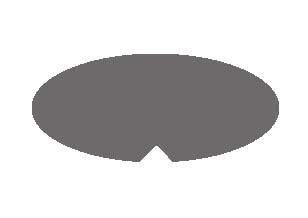
Difference Between Wafer Flats and Wafer Notches
Historically, silicon wafers below 150mm typically used orientation flats to indicate crystal orientation and, in some cases, doping type. However, larger diameter wafers generally use a notch instead of a flat. While the notch accurately identifies crystal orientation, it does not indicate whether the wafer is p-type or n-type.
The transition to notched wafers improved equipment compatibility, reduced edge exclusion areas, and supported the high-volume automation required by modern semiconductor manufacturing.
Common Notched Silicon Wafer Sizes
| Wafer Diameter | Orientation Method | Typical Applications |
|---|---|---|
| 150mm (6 Inch) | Notch | MEMS, Sensors, Research |
| 200mm (8 Inch) | Notch | Power Devices, CMOS |
| 300mm (12 Inch) | Notch | Advanced Semiconductor Manufacturing |
Notched Silicon Wafers Available
UniversityWafer supplies 150mm, 200mm, and 300mm silicon wafers with orientation notches for semiconductor research, MEMS fabrication, photonics, power electronics, and production applications. Wafers are available with a variety of crystal orientations, resistivities, dopants, oxide layers, and surface finishes.
Whether you require prime-grade silicon wafers, test wafers, monitor wafers, or custom specifications, our team can help identify the correct notch orientation and wafer configuration for your application.