Optical Grade Wafers for Single Particle Spectroscopy
UniversityWafer supplies optical grade sapphire, fused silica, quartz, and Borofloat wafers used in single particle spectroscopy, confocal microscopy, TEM analysis, and nanocrystal lithography research.
Optical Grade Wafers for Single Particle Spectroscopy
UniversityWafer supplies ultra-thin optical grade wafers for single particle spectroscopy, nanocrystal microscopy, lithography, confocal microscopy, and TEM research.
A PhD researcher at an international university requested optical grade 3-4 inch ultra-thin glass and sapphire wafers for single particle spectroscopy. The substrates were needed for Al2O3 growth, aluminum deposition, mask lithography, and optical microscopy on nanocrystals.
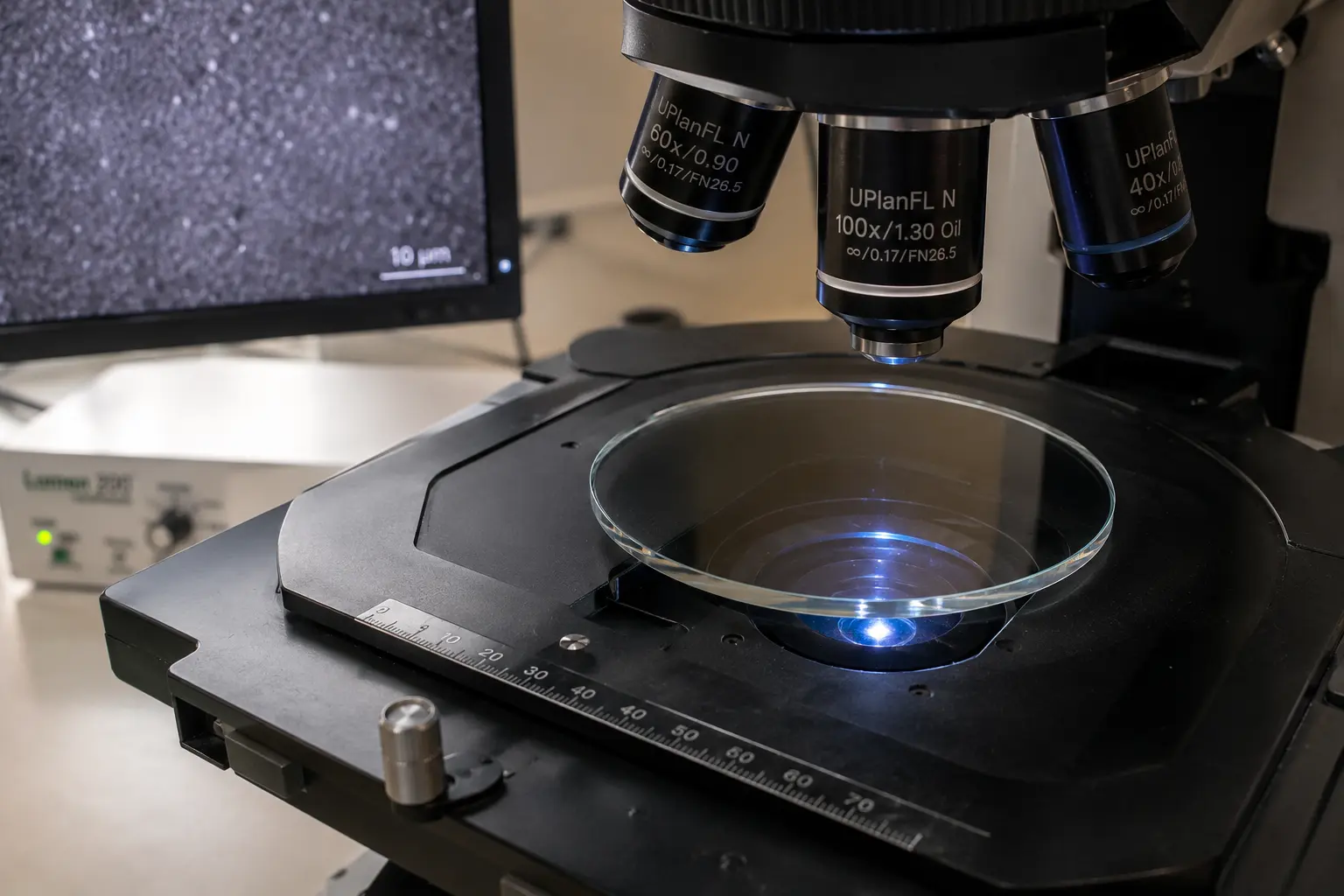
The required wafer thickness was between 140-175 microns to match the working distance of a transmission confocal microscope with a 100x objective and 0.16mm working distance. The researcher also requested double-side polished surfaces to improve optical clarity and reduce unwanted background signal during spectroscopy measurements.
Single particle spectroscopy is an advanced analytical technique used to study the optical, chemical, and structural properties of individual nanoparticles, aerosol particles, and nanocrystals. Researchers commonly use optical grade glass wafers, sapphire wafers, fused silica substrates, and quartz wafers because these materials provide high optical transmission, low surface roughness, and excellent thermal stability.
Single particle spectroscopy is widely used in nanotechnology, atmospheric science, photonics, semiconductor research, biosensing, and materials science. The technique can analyze individual particles without relying on ensemble averaging, allowing researchers to obtain more accurate nanoscale measurements.
Best Wafer Materials for Single Particle Spectroscopy
The selection of substrate material is critical for high-resolution spectroscopy applications. Researchers often require double-side polished wafers with ultra-low roughness and excellent optical properties for confocal microscopy and transmission measurements.
Optical Grade Sapphire Wafers
Sapphire wafers are commonly used for spectroscopy applications because of their excellent optical transparency, high hardness, chemical resistance, and thermal stability. Sapphire substrates also perform well under high electron beam energy during TEM microscopy, making them suitable for advanced nanocrystal analysis.
Fused Silica and Quartz Wafers
Fused silica wafers and quartz substrates offer excellent UV and visible light transmission, making them ideal for Raman spectroscopy, fluorescence microscopy, and laser-based optical systems. These materials are frequently selected for applications requiring low autofluorescence and high optical purity.
Borofloat Glass Wafers
Borofloat glass wafers are widely used for lithography and microscopy because of their smooth surface quality and low thermal expansion. Ultra-thin Borofloat substrates are commonly used in transmission confocal microscopy systems with limited working distance requirements.
Single Particle Raman Spectroscopy Applications
Single particle Raman spectroscopy allows researchers to characterize the composition and behavior of individual particles in situ. The technique is frequently used to study aerosol particles, nanoparticles, semiconductors, and nanocrystal materials. Optical-grade wafers are important because substrate defects and surface contamination can negatively affect Raman signal quality.
Researchers often deposit thin films such as Al2O3 and aluminum onto thermal oxide wafers, sapphire, and fused silica substrates using lithography and deposition techniques. These substrates must maintain high flatness and low roughness to support nanoscale imaging and spectroscopy measurements.
Surface Plasmon Resonance Spectroscopy
Surface plasmon resonance (SPR) spectroscopy is used to detect molecular interactions and nanoscale optical changes on metallic surfaces. SPR systems commonly rely on high-quality optical substrates with precise thickness control and excellent transparency. Researchers often use glass wafers and fused silica wafers for plasmonic and biosensing applications.
The technique can detect extremely small optical changes and is commonly used in photonics, semiconductor sensing, biosensors, and nanomaterials research.
Extinction Spectra Analysis in Single Particle Spectroscopy
Extinction spectra analysis measures the scattering and absorption behavior of nanoparticles and nanocrystals. Researchers use spectroscopy substrates with low optical interference and high transmission to improve measurement accuracy. Materials such as sapphire, fused silica, and quartz are commonly selected because they minimize unwanted background signals.
High-resolution extinction spectroscopy is widely used for studying plasmonic nanoparticles, semiconductor nanostructures, aerosol particles, and photonic materials.
Wafer Requirements for Confocal Microscopy and TEM Analysis
Many spectroscopy applications require ultra-thin substrates between 140 and 175 microns to accommodate microscope working distance limitations. Optical-grade wafers used for confocal microscopy and TEM applications are typically manufactured with:
Double-side polished surfaces
Low total thickness variation (TTV)
High optical transmission
Low autofluorescence
Excellent flatness
Minimal surface contamination
Researchers frequently request custom silicon wafers, sapphire substrates, and glass wafers for spectroscopy systems requiring lithography, thin film deposition, and nanoscale optical imaging.
Applications of Single Particle Spectroscopy Wafers