Silicon Wafer Grooves

Get Your Quote FAST!
How to Form Silicon Wafer a
The formation of silicon wafer grooves can be achieved through several techniques. One technique uses plasma etching to produce V-grooves. This technique forms the grooves in Si wafers by cutting the silicon wafer into thin strips. A conventional dicing saw with beveled blades is used. The tip angle of the blades and depth of the grooves play a major role in the optical quality of the surface.
Another technique is the use of laser beam machining, a thermal advanced machining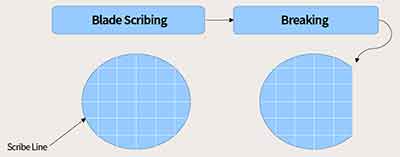 technique. This process is capable of machining various types of materials, including silicon. Researchers have been exploring how to improve the quality of micromachining with Nd-YAG lasers. In this study, researchers have investigated the effects of frequency and diode current on the surface roughness. Compared to traditional V-grooving with beveled blade, this method has a higher throughput.
Laser beam machining is another thermal advanced machining technique. It is a fast and efficient method for machining all kinds of materials. Researchers have been exploring how to improve the quality of micromachining with Nd-YAG lasers. The present study explores the effect of frequency, diode current, and temperature on the surface roughness. These parameters affect the quality of the resulting silicon surface. This paper also presents a new technique using wire-grooving.
AFM micrographs of silicon wafers show that the mechanical grooving process of 3C-SiC is able to produce 17.2% of the desired multicrystalline cells. The main disadvantage of this technique is the low throughput of a single wafer every two hours. A multiblade system is more efficient and has a much higher throughput than a single-blade procedure. The wire-grooving method, however, is not as accurate as the former two.
A recent study used a single-blade, dicing saw, and wire grooving techniques to produce silicon wafer grooves. The process achieved a 17.2% efficiency for 10x10 cm2 multicrystalline cells. Its downside was the slow throughput of a single-blade grooving process. While the multiblade method is more effective than a single-blade method, it is also more expensive than a single-blade system.
The optical grooving technique has shown promise for the fabrication of multicrystalline cells. This process also allows for high-throughput manufacturing. In recent years, researchers have been exploring ways to improve the performance of this method of grooving. They have discovered that a combination of two different techniques improves the efficiency and the surface roughness of micromachining. Aside from this, a new type of electrically-driven machining technology is developing for making microcircuits.
A recent study on the mechanical grooving process has found that a single-blade, beveled saw has the highest efficiency for 10x10 cm2 multicrystalline cells. While the single-blade grooving process may produce the best results, it also has the lowest throughput compared to a multi-blade system. Meanwhile, wire groves have been introduced as a mechanical surface structuring process. This technology can be improved by varying the frequency and diode current of the beams.
The present method of grooving silicon wafers involves an elastic material box with a lid that is shockproof. It can accommodate several silicon chips and can be used to fabricate solar cells. The grooving process has been widely used in various industries for decades and is a popular choice for producing various components. In this research, researchers have explored ways to improve the micromachining process using a beveled blade. A high-frequency diode can decrease the number of slits, and this technique is more cost-effective.
The solar silicon wafers damping box is made of an elastic material. The lid is equipped with several silicon chip grooves that extend from one to the other semi-roundly. The lid is also equipped with a finger groove for convenient pick-ups. As a result, the solar silicon wafers damping box is a very efficient tool for micromachining. This type of process is ideal for processing multiple layers of multicrystalline cells.
The silicon chip grooves are designed to be compatible with other layers. The lid is equipped with a damping bar for reducing vibrations. These silicon chip grooves are compatible with a wide range of materials. The lid is the most common material for photovoltaics, which is made of glass or plastic. The glass covers the silicon chip. The lid is the outermost layer, which helps prevent shocks from occurring.