Blogging for Wafers

Semiconductor Blog Carousel
Nexperia and United Automotive Electronic Systems Co., Ltd. Agree Comprehensive Partnership for Gallium Nitride
The program focuses on energy systems for electric vehicles with the aim of jointly developing GaN technology for automotive applications. The increasing demand for electricity in the automotive industry, especially in electric cars, requires high-power semiconductor technology such as GaN, which is becoming mainstream. This trend is underpinned by the growing demand for semiconductor power until 2021.
The United Arab Emirates has already started to deploy Nexperia's GaN FETs in a number of joint projects, including the development of a powerful and cost-effective electric vehicle system for the UAE. In addition to the production of the new electric car, Nexperia's GaN technology will also be supplied to support the application of reverse recovery charge (Qrr) technology in the automotive industry to reverse the recovery charge of QRR in electric vehicles.
The United Arab Emirates provides automakers with access to Nexperia's expertise in the manufacture of high-performance GaN FETs for the automotive industry. With its own global manufacturing facilities in China, Japan and the United States, Nex Xperia manufactures a wide range of GaN-based products for automotive, industrial and consumer markets with sophisticated and reliable mass production techniques manufactured to the AEC Q101 automotive standard.
With five technology centers in China, Nex Xperia, the world's largest GaN manufacturing company, has access to the most advanced technology and equipment in the industry. These sophisticated devices effectively provide high-quality engineering services, including the development, manufacture, testing and distribution of advanced electronic products and the production of high-quality electronic components.
We believe that the increased collaboration with GaN will help both companies to offer our customers the highest - quality, high - performance and low - cost of electronic products and services. The high performance of silicon-based GaN field effect transistors will play a key role in electrifying cars, and we recognize the need for more efficient and efficient use of the technology in the automotive industry.
We are pleased to work with Nexperia to develop an innovative electric vehicle system based on GaN technology, "said a UAES management spokesman. We intend to expand our investments and jointly create a high-performance, cost-effective and highly efficient power supply system. United Automotive Electronics Systems Co., Ltd., a subsidiary of United Auto Electronics Systems, Inc., has announced its full support for the development of the new product. Nex Xperia is a leading supplier of semiconductors for automotive applications with a strong presence in the automotive industry in Japan, Europe, Asia and the United States.
The partnership will help reduce the number of devices used, reduce costs, increase power density and increase the reliability and effectiveness of the entire system.
Epiluvac Supplies Cvd Reactors To Polish Research Group
Epiluvac in Lund, Sweden, has been awarded an order for the supply of CVD systems for its ER3 reactor. The system will be used for advanced semiconductor research and research and development of new materials and technologies will use the new technology as well as a number of other advanced materials such as ceramics.
Roger Nilsson, CTO at Epiluvac, said: "Reactor development began a few years ago in cooperation with Linkoping University. In recent years, the design has been refined into a brand new platform with a new reactor design and a range of new materials and technologies.
We also have a multi-system approach, in which two or more systems can be combined, which allows the user to optimise the chemistry of the individual reactors and thus achieve very high yields. From the very beginning, we developed an 8-inch wafer that required a new solution for controlling temperature, pressure, temperature and other parameters for each reactor, as well as flow rate.
The CVD-systems are designed with Epiluvac ER3 reactors for 8-inch wafers epitaxy of SiC and GaN. They are intended to be used for R&D in new materials technology.
It is equipped with an automatic robot handler that connects the two reactors. To increase production capacity, the wafers are preheated and cooled in each reactor and then preheated in the other reactor.
The new ER3 also has a patented function that minimizes wafer foil, and customers can add in-situ measurements in the form of in-situ measurements of temperature, pressure and other parameters. Epiluvac offers a turnkey solution that includes a system to put the system into operation for fundamental and epitaxial growth. This is the first of its kind in Europe and the world, "he added.
The device is used in electric vehicles and is used to produce more efficient electronic components. It is also used to manufacture components with high - performance, low - cost - up to - weight for electric cars and buses.
Do dopant rings on silicon wafer surface affect the performance of a wafer?
Dopant rings are the same as striation marks and they sometimes occur in heavily doped silicon wafer surface where one can visibly see small insignificant differences in doping concentration throughout the crystal. To our knowledge they are cosmetic and do not affect the properties of the wafer.
Prime Grade Wafers meet all of the SEMI organizations standards and Test Grade Silicon Wafers do not.
Why Silicon Could Replace Carbon Anonode in EV Batteries
One huge benefit of silicon anode is it has three times the energy density of carbon. Currently the only way to get more power/efficiency of a batter is to increase the amount of material per unit, thus driving up the battery’s energy density. Silicon’s main drawback is that it will 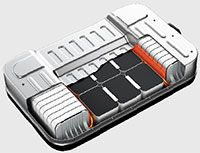 expand 300% when charging and contract 300% when discharging.
Researchers are currently working on a complex 3D structure to keep the silicon under uniform pressure so that it does not expand to any size that could cause battery failure.
This 3-D architecture allows us to constrain that expansion in a very uniform way within the cell that provides the battery with a long lifecycle. A Silicon anode battery could hold around 50% more energy than what's currently on the market. The result would be smaller, lighter electronics devices with much higher endurance.
Silicon Wafer based Laser
John Bowers, a professor of electrical and materials at UC Santa Barbara, pioneered a way to integrate a laser onto a silicon wafer fifteen years ago. This technology is now widely used in conjunction with other silicon photonics devices to replace copper-wire interconnects which once linked servers at data centers. It dramatically increases energy efficiency, which is important at a time where data traffic is increasing by approximately 25% annually.
The Bowers group has been working with Tobias J. Kippenberg, at the Swiss Federal Institute of Technology (EPFL), for several years. This collaboration is part of the Defense Advanced Research Projects Agency's (DARPA), Direct On-Chip Digital Optical Synthesizers (DODOS). The "microcombs" were discovered by the Kippenberg group. They are a series low-noise and highly stable laser lines. Each line of the laser comb can contain information, increasing the number of data that can easily be sent using a single laser.
Recent demonstrations showed that a number of teams were able to create compact combs by placing both silicon nitride-ring-resonator and semiconductor laser chips very close together. The laser and resonator were separate devices that were made separately and placed close to each other. This was a time-consuming and costly process that is not easily scalable.
The Bowers laboratory has collaborated with the Kippenberg laboratory to create an integrated on-chip semiconductor resonator and laser capable of producing a microcomb. A paper titled "Laser soliton microcombs heterogeneously integrated on silicon(link is external)," published in the new issue of the journal Science describes the labs' success in becoming the first to achieve that goal.
Soliton microcombs, which emit optical frequency lines in mutually coherent phases, are optical frequency combs with the ability to produce laser lines that are constant and unchanging relative to one another. This technology can be used in optical timing, metrology, and sensing. Recent field demonstrations include multi-terabit-per-second optical communications, ultrafast light detection and ranging (LiDAR), neuromorphic computing, and astrophysical spectrometer calibration for planet searching, to name several. This powerful tool requires extremely high-power lasers, expensive optical coupling, and exceptional precision in order to work.
Chao Xiang (postdoctoral researcher) explained that a laser microcomb works on the principle of a distributed feedback laser producing one laser line. The line passes through an optical phase control and enters the microring resonator. This causes the power intensity of the light to increase as it travels around the ring. Non-linear optical effects can occur when the intensity exceeds a certain threshold. This causes the laser line to produce two identical lines on each side. Each of these "sidelines" creates another, resulting in a cascade generation of laser-line generators. "You end up having a series mutually coherent frequency combs," Xiang stated -- and a greatly expanded capability to transmit data.
This research allows semiconductor lasers to seamlessly integrate with low-loss optical micro-resonators. "Low-loss" is because light can travel through the waveguide without losing any of its intensity over time. The device can be controlled entirely by electricity and no optical coupling is necessary. The new technology is able to be commercially scaled because it can make thousands of devices from a single wafer by using industry-standard complementary metal oxide semiconductors (CMOS-compatible) techniques. Researchers stated that their approach "paves the way to large-volume, low cost manufacturing of chip-based frequency combiners for next-generation high capacity transceivers and datacenters, as well as mobile platforms"
The main challenge when making the device was that both the semiconductor laser (which generates the comb) and the resonator (which creates it), had to be constructed on different materials platforms. Lasers cannot be made with materials other than those listed in the Periodic Table's III and V groups. The best combs are made from silicon nitride. "So, we had the challenge of putting them all together on one wafer," Xiang said.
The researchers used UCSB's heterogeneous process for making high-performance lasers on a silicon substrate, and their EPFL collaborators' ability to create record-setting high-Q silicon-nitride microresonators using their "photonic damascene" process. They worked sequentially on the same wafer. This wafer-scale process, which is different from making individual devices and then combing them one-by-one, allows thousands of devices to come out of a single wafer measuring 100 mm in diameter. It also gives the ability to scale up production levels beyond that of the 200mm or 300-mm industry-standard substrates.
The device must function properly if the laser, resonator, and optical phase between them are controlled in order to create a coupled system that is based on "self-injection locking". Xiang explained how the laser output is partially reflected by the microresonator. The laser is locked to the micro-resonator when a certain phase is reached between the laser's light and the back-reflected light of the resonator.
Back-reflected light is not good for laser performance but it is essential to generate the microcomb. The laser light locked triggers soliton formation within the resonator. It also reduces frequency instability or laser light noise. This transforms something bad into something positive. The team was able not only to create the first integrated laser soliton microcomb on a single chip but also the first narrow linewidth laser sources that have multiple channels on one chip.
"Optical comb generation is a very exciting field that is moving at a rapid pace. It has applications in optical clocks and high-capacity optical networks, as well as many spectroscopic uses," Bowers, who is the Fred Kavli Chair for Nanotechnology and director of the College of Engineering’s Institute for Energy Efficiency, said. "The missing element was a self-contained chip which includes both the pump laser as well as the optical resonator. This key element was demonstrated and should allow for rapid adoption.
Xiang said, "I believe this work will become very large." He said that the potential of this technology reminds him of how putting lasers onto silicon 15 years ago helped both research and commercialization of silicon-photonics. He said that Intel has shipped millions of transceiver units per year because this transformative technology was commercialized. Future silicon photonics that use co-packaged optics are likely to be a powerful driver for transceivers with higher capacities and a wide range of optical channels.
Xiang stated that the current comb produces approximately twenty to thirty usable comb line and that the goal is to increase that number. "Hopefully, one hundred combined lines will be possible from each laser-resonator with low power consumption," he said.
Based on the soliton's low energy use and ability to provide a large amount of high-purity optical comb line lines for data communications, said Xiang: "We believe our achievement could be the backbone of efforts in optical frequency comb technology in many areas, including efforts in keeping up with fast-growing data traffic, and hopefully slowing down the growth in energy consumption in mega-scaled datacenters."
How is Water Used in Semiconductor Manufacturing?
In semiconductor manufacturing, water plays an important role in both the design and process of the fabrication of semiconductors. It has a vital role in many processes, but especially in those processes where extreme heat is involved. This is because water can be contaminated by several impurities during the fabrication process, resulting in excess heat which can damage the electronics when it is processed. Furthermore, the entire chip may become affected, which will require another replacement. However, the use of water is mandatory in many of these processes, and no other method can guarantee absolute cleanliness and purity.
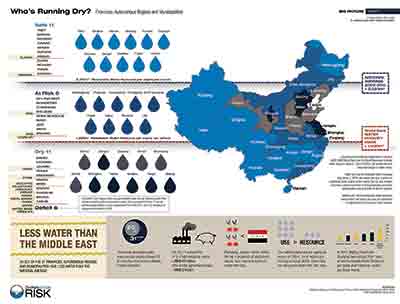
How is water used in semiconductor manufacturing? The entire fabrication process begins with the removal of the contaminates from the microchips. This is done through ultrafiltration, where water molecules are detached from the semiconductors using powerful chemicals. Sub-micron filtration is then performed, removing any present contaminants. Ultrafiltration is the process used in all chip production process, as it is the only method which ensures pure water at all times.
The most common contaminant found in semiconductors is bacteria. All other contaminants are removed by other means, and then further purification using ultrafiltration. The most common microorganisms found in semiconductors are yeast and bacteria, which cause great harm to the fabric during the manufacturing process. To keep these microorganisms at bay, various methods of water treatment are employed.
The most common way of water treatment is by use of high pressure water treatment systems. These systems pump large amounts of water through the fabrication process, forcing it down to the final fabrication area. This is achieved via gravity or by physical means. The wastewater treatment systems are designed to remove all forms of contaminants, leaving behind the essential minerals which are essential for the manufacture of fabs.
A secondary wastewater treatment method is used in order to ensure cleanliness of the water used for fabrication. This method is called submicron filtration. This is the most commonly used high-purity water treatment method worldwide. It removes the microorganisms from the wastewater, which are too small to be able to be seen with the naked eye. In fact, many scientists believe that it is impossible to see any microorganism in the human body.
Another common method used for water use in the semiconductor manufacturing industry is deionization. This process removes various salts and metals from the semiconductors during the manufacturing process. The salts and metals are removed so as to reduce the contamination in the working environment. During this process, there will be no solutes left over which can be harmful to humans. Water which is deionized is not suitable for drinking as it will turn color and is tasteless.
The third type of water used in semiconductor manufacturing is ultraviolet (UV) water purification. This is the best method to get rid of microorganisms and contaminants from the semiconductors. The procedure involves using ultra violet light to destroy all types of microorganisms and contaminants present in the water. However, this is the most expensive method available to get rid of contaminants. It also has the lowest water quality rating because most of the ultraviolet radiation is wasted in heating the water which is then used to fill chips.
How is water used in semiconductor manufacturing? To maintain high quality performance in manufacturing processes, it is important that there is an ultra-pure water present during the manufacturing process itself. It is estimated that the average water used is about seven million gallons for every one million gallons processed. In addition to this, in order to improve the life span of the semiconductors, the water used must be free from any pollutants. Therefore, it is essential to avoid all sources of pollution that can harm the environment during the process.
Video: Reclycling Water for Semiconductor Fabrication
Crystalline Silicon Helps Scientists Research the Mysterious 5th Dimension
Silicon wafers have been used in everything from computer chips to automobile tires for quite some time. The properties of the element make it ideal for the use of engineers and scientists as it is the basis of all matter whether it is solid liquid, or gas. But what is really more interesting is that its uses extend far beyond the known universe. In fact, it plays a significant role in helping scientists explore the mysteries of the universe.
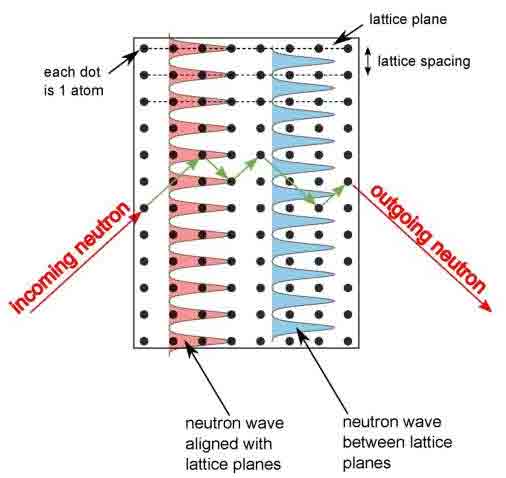
In much the same way as electrons play a vital role in moving energy through an atom, different types of particles also need to move energy inside a vacuum or other sort of container. If you think about it, you will realize that the strength of magnets relies on the strength of the particles they are attracted to. The same holds true for the other elements in the Standard Model of the universe. For example, the neutrons that make up protons have an extremely weak pull on other neutrons which ultimately leads to the instability of the atomic nucleus.
As mentioned earlier, the existence of neutrons relies on the strength of electromagnetic radiation. The existence of photons, which are particles of light, also depend on the strength of the fifth force. This means that if two different kinds of atoms make up different kinds of photons, and if they are close enough in proximity, these photons will act in a manner similar to the fifth force, resulting in the generation of energy.
In order to study the workings of this fifth force, scientists use a special kind of laboratory known as a neutron microscope. A neutron microscope works by shining a strong beam of neutrons onto the atoms which make up a sample. The light interacts with the electrons and thus researchers can learn about the behavior of these tiny particles. The different kinds of atoms have different electrons, which can be measured using this technique. This method is useful in identifying the different elements of a sample, and in identifying the atom which is the most similar to another.
When researchers work with silicon, they do so because it is one of the most abundant elements in the Earth's crust. It makes up 90 percent of the soil we walk upon. In addition, it makes up the backbone of all life on Earth, from bacteria to marine algae. Researchers are aware of the importance of the element for life but they are not entirely sure how it forms, or how it exists within the Earth's crust.
With the help of silicon, researchers have been able to create a model of the atom which helps them better understand its structure. By finding out how silicon forms at the atomic level, they were able to create a way of visualizing the atom and how various different kinds of silicon atoms bond together. The atoms of silicon are arranged in a particular way, and the different kinds of bonds which bind them form a lattice. As this lattice is made up of smaller units, there are ways in which the researchers can visualize the atoms of silicon more clearly.
The lattice structure of silicon atoms makes it unique among other elements in the Earth's crust. The lattice of silicon is a five-dimensional world in itself, which means that it has spatial dimensions as well. Researchers have found that the five-dimensional nature of silicon goes beyond the regular 3D modeling of the element in our regular two-dimensional world. They have also discovered that there are many different types of silicon, which have their own distinct spatial properties. By understanding the properties of these different types of silicon atoms, the lattice structure of silicon can be explored.
When looking into the structure of atoms at different spatial scales, scientists have used this method to study not only the electron orbitals, but also the bonding of hydrogen atoms with carbon atoms. This method is called superluminal electrodial theory, and it is based on the notion that elementary particles have an alternative orbital, which is known as their "orbital tunneling shell". Particles of high enough energy tend to occupy these shells, which gives rise to a stronger attraction between the two atomic particles. This way, the researchers were able to explore the five-dimensional structure of silicon at the atomic level.
What are Silicon Wafers in Layman's Terms?
If you want to understand what is silicon wafers, it is essential to understand the way that they are created. Ultimately, a silicon chip is a semiconductor, and silicon wafers are used in almost every electronic device today. Here are some of the benefits of using this type of material: Read on to find out more! To make semiconductors, a silicon ingot is a large piece of silicon that is grown to a specific size and specification. A single crystal silicon wafer can take from one week to a month to grow.
A silicon wafer is used as a semiconductor in electronics and is used in the manufacturing of integrated circuits. An integrated circuit is a stacked stack of electronic components that work together to perform a function. An integrated circuit can contain hundreds of millions of transistors, resistors, and capacitors, and is crucial to the function of many types of electronic equipment. But how do you go about creating one? Here are some tips to get started:
Silicon wafers are used in electronics, including semiconductor chips. They are inexpensive to produce, and their high purity is important for their efficiency. Because of their high purity, silicon wafers must be extremely pure to be effective in electronic devices. Impurities can affect the performance of solar cells and electronics. Even tiny disruptions can impede electron flow, so manufacturers must make sure that the silicon they are using is pure. Ideally, silicon wafers should be single crystals, but this is difficult to achieve in the real world.
Another important factor for the market is that the demand for renewable energy sources is increasing rapidly. This will result in more demand for silicon wafers and will further develop the semiconductor industry. So, what is the future of silicon wafers? In addition to being able to use them for solar energy, they are also essential for the development of modern electronics. In fact, silicon is the most widely used semiconductor material today, so it is essential to ensure that your production processes are as efficient as possible.
In semiconductor manufacturing, silicon is the most common material. But it can be used in a wide variety of applications. Currently, silicon wafers are a popular part of computers. And the technology behind them is rapidly expanding. However, it is not an easy task to manufacture a semiconductor. In fact, the process can be highly complex, and engineers need to know the requirements and benefits of their product. It is not just the materials that are used in semiconductors, but also the processes that are applied to the fabrication of these devices.
Several publications have been written on the history of silicon in silicon wafers. The first one is Levy, Roland Albert. The second is Grovenor, C. Nishi, Yoshio. The history of the silicon wafers is an essential part of the technology. The two are important for the industry. They provide the foundation for a vast variety of electronic devices. When it comes to the technology behind silicon, they play a major role in every industry.
The first step in creating a semiconductor is to make it a semiconductor. The most basic form of silicon is a silicon chip, which is a type of semiconductor. It is a crystalline material, and the most common type of semiconductor is silicon. These are typically rectangular, but some people prefer to use a larger variety of shapes, such as a hexagonal one. You can create a device of this material in many ways, and it is important to consider the material's composition.
The main difference between a silicon ingot and a silicon wafer is the process by which it is grown. The first step is to make a silicon ingot. This is a flat sheet of material that is made from silicon. It is then grown in a machine. Usually, it takes a few days to grow a single crystal. This is not a difficult task and requires some experience. Once you know the fundamentals of how a semiconductor is made, you can start making an informed decision.
Silicon wafers are a critical component of semiconductor manufacturing. They are the most common type of semiconductor and are used in a variety of devices. They help to increase the efficiency of solar cells by increasing the area of the solar cell. They are also used in the manufacturing of solar cells. The brittleness of silicon wafers can be a problem for many manufacturers, especially when nearing the completion phase.
Get Your Question Answered FAST!
What is Moore's Law?
Moore's law is not a natural law, but one made up to provide future expectation that the density of a microchip will double, on average, every two years. This decreases the chips speed while increasing its performce.
The cost of the chip is miniscule to the designing of the chip architecture. The smaller you go the harder it is to fabricate how the electrons flow and what connects to what.
It's often believed that Moore's Law will soon end. However this seems highly unlikely as engineers are working hard to extend the future of the law.
Silicon Wafer Blog
-
Top Things You Should know About Silicon Wafers
-
Best Silicon Wafer Etching Processes
-
Things You Should Know about Silicon Wafer
-
How do you make Silicon Wafers into Computer Chips
Will Gallium Nitride (GaN) Replace Silicon (Si)?
What is Micropipe Defect Density?
What Silicon Wafer Should I Use for Spin Coating?
What Silicon Wafers are Used To Fabricate Electrodes Used In Lithium Ion Batteries?
Differences Between Amorphous and Crystalline Solids?
Silicon and The Process of Ion Implantation
What are Silicon Electronics and What do They Look Like?
What are Silicon Wafer Crystalline Defects?
What are the Pros/Cons of Gallium Arsenide Solar Cells?
How Do Photovoltaics Work?
What is Germanium (Ge)?
What Silicon Wafers do I use to Grow Pollen on?
What do Silicon Wafer Wells Look Like?
What is the dielectric properties and optical properties of 200mm Sapphire Wafers?
Why Use Highly-Doped Silicon Wafers?
What is the Thermal Behavior of Sapphire Wafer?
What is Black Silicon Wafer Applications?
Advantages and Disadvantages of MOVCD
Silicium Wafers for German Semiconductor Industry
Silicon Carbide Wafer Supplier
Silicon Wafer Materials
What Cassette Should I Use for Substrate Packaging?
How To Choose The Right Silicon Wafer?
What Electronic Wafers Should Be Used for Research and Production?
What are Doped Semiconductors?
Learn About Scratch/Dig on Substrates
What Substrates are Used to Fabricate Film Bulk Acoustic Resonators?
What Substrates Used to Fabricate Nanoparticles?
What Substrates are Used for THz Spectroscopy?
What Alpha Quartz Do You Need for Your Research?
What Substrates Are Used Under an Optical Microscope?
Why Ultra-Flat Substrate Surfaces Are Essential for van der Waals Experiments?
What Strontium Titanate (SrTiO3) Wafers are Needed for Research and Production?
Mohs Hardness of Semiconductor Substrates
Substrates Used in Integrated Circuit Design
What Are III-V Semiconductors?
What Substrates Are Used to Fabricate mmWave Devices?
Photolithography Process
USA Made 200mm 4H Silicon Carbide Wafers
What’s the Importance of RoHS Standards?
Fluorine-Doped Tin Oxide (FTO) Substrate Applications
What Substrates Are Used to Fabricate Pyroelectric Detectors?
Affordable Sapphire Wafers for Optoelectronic Applications
Comparing SOI Wafers: 150mm vs 200mm
Understanding Raman Spectroscopy for Material Analysis
Silicon vs. Sapphire Wafers for Optoelectronics
What Substrates Are Used for Polaritonic Research?
What are Polar Materials?
What Substrates Are Used to Fabricate Visible-Light Communication Systems?
What are the Wafer Manufacturing Steps?
Best Silicon Wafer Specs to Fabricate Cutting-Edge Electronics
What Substrates Are Used to Fabricate Amorphous Transistors?
Substrates Used To Fabricate Actuators
What Are Reclaimed Silicon Wafers?
Diamond Semiconductor Substrate Advantages
Sapphire Substrates Used to Fabricate LED Sensors
4H Silicon Carbide Substrates for EV Power
FC-BGA vs. FC-CSP: Choosing the Right IC Substrate for AI, 5G, and HPC Packaging
From Lab to Fab: Why Engineers Choose III-V Substrates
Why GaN is Challenging Silicon in the Semiconductor World
Unlocking Microelectronics: Best Silicon Wafers for Research
Top Applications for Silicon Carbide Wafers
Benefits of Ultra-Thin Silicon Wafers
Revolutionary MEMS Sensors Transforming Industrial Applications
Silicon Carbide Wafers for High-Temperature Electronics
Unlocking Power: Silicon Carbide Wafers in Electronics
Mastering Sapphire Wafer Maintenance for Long-Lasting Performance
Sapphire Wafers for High-Frequency Electronics
Revolutionizing MEMS with Innovative Thin Films
Maximizing the Use of Silicon Wafers in MEMS Technology
How to Choose Custom Wafer Sizes: A Comprehensive Guide
Optimize Your Research with SIMOX Wafers
Popular Silicon Wafer Variations for Microelectronics
Best Techniques for Etching Silicon Wafers
Lithography Techniques for Silicon Wafers
Best Practices for Handling Silicon Wafers
Doped vs. Undoped Silicon Wafers: A Comprehensive Comparison
Best Thermal Oxide Deposition Techniques for Silicon Wafers
Substrates Used to Fabricate Quantum Transistors
Diamond-Like Carbon (DLC) Coatings on Silicon Wafers
Substrates Used to Fabricate Power Electronics
Wafers Used to Fabricate Nanopore Membranes
Silicon Wafers Used to Fabricate Photovoltaics
Silicon Carbide Substrate Manufacturing
Silicon Carbide vs. Silicon Wafer Performance & Price
Choosing the Correct SOI Wafer Specs
Silicon-on-Insulator Used to Fabricate Integrated Circuits
SOI Technology Used to Fabricate MEMS Devices
Silicon-on-Insulator (SOI) Research Guide
Comparing Silicon Wafer Types
Quartz Substrates for Precision Timing Technologies
What Substrates Are Used to Fabricate MEMS Audio Devices for Earbuds?
What Is Space-Based Semiconductor Manufacturing?
Applications of Optical-Grade Lithium Niobate Wafers
How to Maximize Silicon Wafer and Substrate Polishing
Customized Lithium Niobate (LiNbO₃) Substrates — Applications & Specifications
Applications of Lithium Niobate (LiNbO₃) in Photonics
How to Choose the Correct LiNbO3 Substrate for Your Application
Discover the Best Lithium Niobate Wafer
What are Lithium Niobate Wafer Sizes?
What GaN-on-Sapphire Substrate is Right for My Research?
Learn About Anisotropic Etching of Silicon Wafers
Precision Semiconductor and Dielectric Substrates for Research
What Silicon Substrates are Used for Aerospace Applications?
What Substrates are Used for Organic Photovoltaic Solar Cell Research?
What Substrates Are Used to Fabricate Flexible Electronics?
Lithium Niobate Substrates for Advanced Nonlinear Optics
What Substrates are Used in Attenuated Total Reflectance (ATR)?
Lithium Tantalate Properties for RF Applications
How to Polish Lithium Niobate Wafers
Lithium Niobate SAW Wafers
What are SAW Device Applications?
What are SAW Integration Best Practices?
Thin Film LiNbO3 Substrates
What SiO2 Thickness on Silicon Substrates is Best for Growing 2D Materials?
What Gelpak Do I Need for Packaging My Wafers?
What Graphene Specifications Are Required to Fabricate Graphene Sensors?
What LiNbO3 Specs Are Used to Fabricate SAW Delay Lines?
What Gallium Arsenide Wafers Are Suitable for Educational Laboratory Testing of Photovoltaic Cells?
What are the Most Economical Silicon Wafers Used to Fabricate Integrated Circuits?
Where Can Researchers Purchase Wafers and Receive Wafer Services?
What Is the Most Common Substrate Used to Fabricate Silicon-on-Chips (SoC)?
The Silicon Bohr Model: Understanding Semiconductor Physics
Etching Silicon Wafers to Fabricate Micro-Planar Heat Pipes
What Silicon Wafer and Substrate Services Do You Provide?
How Do You Prepare Silicon Carrier Wafers for Reactive-Ion Etching?
Vertical Gallium Nitride Substrates
What are Schottky Barrier Diode Structures?
What is Crystalline Silicon (C-Si)?
InGaP Thin Film Substrates for Photonic Metasurfaces
Best Doping Techniques for Silicon Wafers
P-Type vs N-Type Silicon Wafers
Silicon Wafer Doping Techniques Compared
Ultra-Thin vs Standard Silicon Wafers
Innovative Substrate Solutions for MEMS
How to Choose Wafer Characterization Equipment
Choosing the Ideal Silicon Wafer for Semiconductor Devices
Silicon Wafer Thickness Standards Explained
Ultra-Thin Silicon Wafers Explained
Diamond-Coated Wafers for Advanced Thermal Management
What is Wafer Level Packaging?
Silicon Wafers Used for Prototyping
What Are High-Quality Silicon Wafers?
What Is the Importance of Silicon Wafer Resistivity?
Why Use Czochralski-Grown Silicon Wafers?
Boron vs. Arsenic Doped Silicon Wafers
What Are Silicon-on-Sapphire Wafer Applications?
What Are Bare Silicon Wafers Used For?
Barium Fluoride Substrates for IR Applications
What Silicon Wafer Specs Are Used to Fabricate Computer Chips?
Thermal Oxide Used for Optical Coating Research
What is Kerf Waste in Semiconductors?
What Silicon Wafer Specs Are Used for Bonding?
Importance of Silicon Diameters
Different Substrate Diameters Explained
What Is the Difference Between Prime and Test Grade Silicon Substrates?
What Substrate Specs Are Used to Fabricate Optical Sensors?
What are Thin Solid Films?
SOI vs. Bulk Silicon Wafer Performance
Choosing the Correct Silicon Diameter
Difference Between 100mm and 150mm Silicon Wafers
Why Choose 150mm Silicon Wafers for Higher Throughput and Lower Risk?
The Difference Between Float Zone and CZ Silicon Wafers
Why Are Double-Sided Polished Silicon Wafers Used in Optics?
4H Silicon Carbide Prime Grade vs. Test Grade Substrates
What Gallium Arsenide Substrates Are Used for Photonics Research?
What Indium Antimonide Substrates Are Used for MWIR IR Sensing Detectors?
What Lithium Niobate Wafer Specs Are Used for Next-Generation Optical Modulators?
What Sapphire Wafers Are Used For?
Optimizing 2D Material Growth: Selecting Substrates for Graphene and TMD Nanosheets
Choosing the Best Substrates for Focused Ion Beam (FIB) Nanofabrication
High-Resistivity Silicon Wafers for RF, MEMS, and Quantum Measurements
SIMOX vs. Bonded SOI Wafers
As-Cut vs. Polished Wafers
TTV and Wafer Flatness Explained
Surface Roughness and Metrology Performance
Double-Sided Polished (DSP) Silicon Wafers for Optics
Scaling to 300mm Silicon Wafers
Best Silicon Wafer Diameters for Prototyping
Undoped Silicon Wafers for Low-Noise Sensors
High-Performance P-Type Silicon Wafers for Detectors
Fabricating Perfect Silicon Spheres
What Is the Importance of the Hall–Petch Equation?
Chemical Vapor Deposition (CVD) of MoS2
Where Should PhD Candidates Buy Silicon Wafers?
What are Cadmium Sulfide (CdS) Wafers?
What Silicon Wafer Specs Are Used to Fabricate Microfluidic Devices?
What Are Germanium-on-Silicon (GeOSi) Wafers Used For?
Why Silicon Carbide Excels at High Temperatures
Czochralski vs. Float Zone Silicon Wafers
What Silicon Wafers Are Used for High-Efficiency Solar Cells?
P-Type vs. N-Type Silicon Wafers
GaN-on-Silicon vs. Sapphire for LEDs
What Are Ultra-Thin Glass Wafers Used For?
What Fused Silica Wafers Are Used for Optical Applications?
Why Silicon Windows for Infrared (IR) Transmission Spectroscopy Are the Best Choice
What Indium Phosphide (InP) Wafer Specs Are Used for Photonics Research and Optical Devices?
We have the blogs to help answer your questions!
We can answer any substrate question! Just ask!
Silicon Wafer Blog
Top Things You Should Know About Silicon Wafers